The best pull workout is not the one that leaves you unable to lift your coffee mug for three days. It is a repeatable session that trains your back, biceps, rear shoulders, and grip with enough effort to create progress without wrecking your next week. I want busy adults to leave the gym stronger, not limping through school pickup. Eat enough. Train hard. Repeat.
What the best pull workout should include
A useful pull session has four jobs. First, it should include a vertical pull, such as a pull-up or lat pulldown, for the lats and upper back. Second, it needs a horizontal row to build mid-back strength and improve shoulder balance. Third, it should train the rear deltoids and upper back with controlled lighter work. Finally, it should give the biceps and grip a direct challenge.
That does not require nine exercises or a shelf full of powders. Four to six movements, performed with good technique, are plenty. For most adults, 12 to 16 challenging working sets in one session is a productive starting range. If you are returning after a long break, begin closer to eight or ten sets. Your muscles adapt to training; your tendons and schedule need time too.
Start with five minutes of easy movement, then perform two lighter warm-up sets for your first exercise. A warm-up should prepare you, not become a second workout. Save your energy for the sets that count.
A practical best pull workout routine
Begin with the lat pulldown or assisted pull-up for three sets of six to ten repetitions. Pull your elbows toward your ribs, keep your ribs from flaring, and lower the weight under control. Do not turn the movement into a swinging contest. When you can complete all three sets at the top of the range with clean form, add the smallest available weight increase.
Next, use a chest-supported row for three sets of eight to twelve. The chest support removes some momentum, which is useful when your lower back already works hard during squats, deadlifts, or life. Pause briefly when your handles reach your torso. Think about moving your elbows, not yanking with your hands.
Follow with a one-arm cable row for two or three sets of ten to twelve per side. This gives you a chance to notice whether one side is doing all the work. Keep your shoulder blade moving naturally rather than pinning it aggressively in place. A controlled stretch at the front and a firm squeeze at the back are enough.
Finish the main back work with a cable face pull or reverse fly for two sets of twelve to fifteen. These are not ego exercises. Use a load you can control, keep your neck relaxed, and stop when your rear shoulders are working instead of your lower back.
Add biceps and grip without wasting time
The best pull workout finishes with direct arm work, but it does not need a circus. Choose incline dumbbell curls or alternating dumbbell curls for three sets of eight to twelve. Keep your upper arm mostly still and lower each repetition for about two seconds. The lowering portion is where many people get lazy, then wonder why their elbows feel irritated.
If your forearms and grip are a limiting factor, add a farmer carry for two or three rounds of 30 to 45 seconds. Use heavy dumbbells that let you stand tall without leaning. Walk slowly, brace your trunk, and stop before your posture collapses. Farmer carries train grip while asking your shoulders and midsection to stabilize, which is more useful than collecting another complicated exercise.
Rest two to three minutes between pulldown and row sets. Rest 60 to 90 seconds for curls, face pulls, and carries. Longer rest is not a character flaw. It lets you produce more quality repetitions, and quality repetitions are what you are trying to accumulate.
How hard should the sets feel?
For most working sets, finish with one to three good repetitions still available. That is often called reps in reserve. You should feel challenged, but you should not need to twist, bounce, or hold your breath until your vision changes. The best pull workout rewards consistent effort, not dramatic suffering.
Use a simple progression system. Pick a repetition range, such as eight to twelve. Keep the same weight until you can perform 12 repetitions on every set with controlled technique. Then increase the load by the smallest practical amount and expect your repetitions to drop toward eight or nine. Build them back up over the next several sessions.
Write down the exercise, weight, repetitions, and any pain or form issue. A notebook or phone note works. Memory is a poor training log, especially after a long workday. If your row was 70 pounds for 10, 9, and 8 this week, next week you might aim for 10, 10, and 9. That is progress. You do not need to add weight every session.
Where it fits in a weekly plan
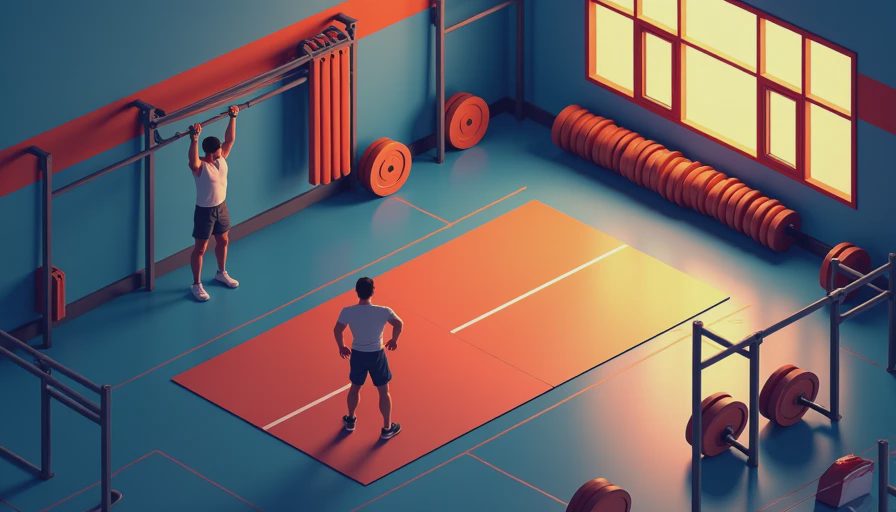
Train this session once or twice weekly, leaving at least 48 hours between demanding pull workouts. If you train three or four days per week, pair it with a push session or use an upper-body day. A simple schedule might place the best pull workout on Tuesday and a lower-body session on Thursday, with an optional shorter pull emphasis on Saturday.
Do not bury your back work after exhausting deadlifts if strength is the main goal. Put the exercise that matters most first. If you want stronger pull-ups, start with pull-ups. If your lower back is tired from hinges, choose a chest-supported row instead of forcing heavy unsupported rows.
For weight loss, remember that lifting is not a permission slip to eat an entire pizza, and it is not supposed to be punishment for dinner. Resistance training helps you maintain muscle while a calorie deficit reduces body weight. Keep protein present at meals, eat carbohydrates around training if they help your performance, and choose a deficit you can sustain. A daily reduction of roughly 300 to 500 calories is often more manageable than a crash plan, but your actual needs depend on your body and activity.
Common mistakes that slow progress
The first mistake is changing the routine every week. Give a sound plan at least six to eight weeks unless an exercise causes pain or your circumstances change. The second is chasing maximum weight with shortened range of motion. A half-repetition with a heavy stack is not automatically stronger than a full controlled repetition with less weight.
The third mistake is doing too much. Five back exercises, three curl variations, and a dozen burnout sets can make recovery difficult without producing better results. The best pull workout is the one you can repeat while sleeping, eating, working, and caring for your family.
Finally, do not confuse soreness with effectiveness. You can gain strength without being sore, and soreness is not a reliable measure of muscle growth. Train with intent, record your work, and make one small improvement at a time.
Your one change this week
Schedule one pull session, choose loads that leave about two good repetitions in reserve, and record every set. Start with three sets of pulldowns, three sets of chest-supported rows, two sets of face pulls, three sets of curls, and two farmer carries. That is enough to begin. The best pull workout is not hidden in an influencer's discount code. It is a straightforward session you perform, fuel, recover from, and repeat.

No comments yet — be the first to share a thought.