If you want stronger back muscles, better posture, and arms that can carry groceries without complaining, the best pull day exercises give you a reliable place to start. Pull training means bringing resistance toward your body: rows, pulldowns, pull-ups, curls, and loaded carries. You do not need a complicated program, seven supplements, or a dramatic transformation challenge. You need a few well-chosen movements, sensible effort, and enough food to recover.
I have helped thousands of people change their health, and the pattern is boring in the best possible way. The people who make progress repeat manageable workouts for months. They do not destroy themselves on Tuesday and limp through the rest of the week. Eat enough. Train hard. Repeat.
What a pull day should train
A useful pull session covers three jobs. First, train the large muscles of the upper back, including the lats, rhomboids, and trapezius. Second, train the muscles that bend the elbow, especially the biceps and brachialis. Third, build strength in your hands and forearms so you can hold the weight long enough to challenge everything else.
Your lower back and hamstrings can also work during hip hinges such as deadlifts and Romanian deadlifts. That does not mean every pull day needs heavy deadlifts. If you already run, hike, play with children, or spend your workday on your feet, your recovery budget is not unlimited. Choose exercises that match your current schedule rather than copying a professional bodybuilder's routine.
The best pull day exercises usually include one vertical pull, one horizontal row, one hinge or rear-chain movement, and optional direct biceps work. That combination covers most bases without turning a 45-minute workout into an afternoon project.
The best pull day exercises to prioritize
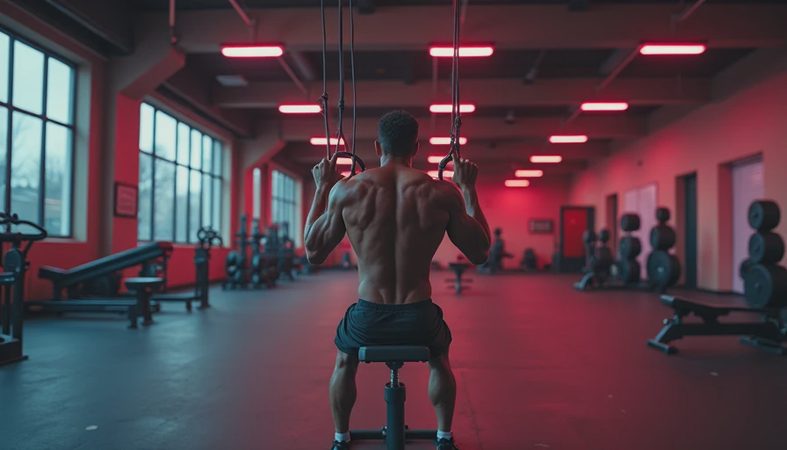
Start with a vertical pull. A lat pulldown is the most practical option for many adults because the machine controls the path and allows easy weight changes. Use a grip that feels comfortable, pull the bar toward the upper chest, and stop before your shoulders roll forward. Three sets of eight to twelve repetitions works well. If you can perform controlled pull-ups, use them instead, but do not treat swinging and half-repetitions as proof of toughness.
Next, choose a supported row. A chest-supported dumbbell row reduces the temptation to use your lower back and is friendly to people who sit at a desk all day. A seated cable row is another strong choice. Pull your elbows behind your body, pause briefly, and return the handle without letting the weight yank your shoulders forward. Three sets of ten to twelve repetitions is plenty for most beginners and intermediate lifters.
For the hinge, try a Romanian deadlift with dumbbells or a barbell. Keep a soft bend in your knees, push your hips backward, and stop when your hamstrings feel a strong stretch while your back remains steady. Two or three sets of six to ten repetitions can build your posterior chain without requiring maximal weights. Finally, add a cable curl or incline dumbbell curl for two sets of ten to fifteen repetitions.
A practical pull workout for a busy week
Here is a complete version of the best pull day exercises that fits into roughly 40 to 50 minutes. Begin with five minutes of easy movement, such as walking, cycling, or rowing. Then perform one or two light warm-up sets before the first two exercises. Warm-ups should prepare you, not exhaust you.
Perform lat pulldowns for three sets of eight to twelve repetitions. Rest about 90 seconds between sets. Follow with a chest-supported row for three sets of eight to twelve. Rest another 90 seconds. Complete Romanian deadlifts for three sets of eight, using a weight that leaves two or three good repetitions in reserve. Finish with cable curls for two sets of twelve and a farmer carry for two walks of 30 to 45 seconds.
The farmer carry is wonderfully unglamorous. Pick up challenging dumbbells, stand tall, keep your ribs stacked over your pelvis, and walk without leaning. It trains grip, upper back, trunk control, and the ability to carry a laundry basket from one room to another. That is fitness with a return on investment.
Do this session once or twice weekly, leaving at least one day between hard pull workouts. If you train your full body three days per week, use the session once and keep the other days focused on pushing, squatting, and general conditioning.
How to modify the workout
New to resistance training? Use machines for the pulldown and row, then practice the Romanian deadlift with a light kettlebell. Your first goal is a repeatable movement pattern, not a heroic number on the weight stack. Start with two sets per exercise and add a third set after two or three weeks if recovery is good.
If your shoulders are cranky, use a neutral-grip pulldown and a cable row with your elbows closer to your sides. Avoid forcing a deep stretch or locking into a grip that causes sharp pain. Muscle fatigue is normal; sudden joint pain is a reason to stop and reassess. A physical therapist or qualified coach can help identify the problem instead of guessing from a short video online.
If you have only dumbbells at home, perform one-arm rows, dumbbell Romanian deadlifts, hammer curls, and suitcase carries. If you have a pull-up bar but cannot do a full repetition, use a resistance band or perform slow step-up negatives. The best pull day exercises are the ones you can perform safely and repeat consistently.
How to progress without wrecking yourself
Pick a repetition range and earn your way to the top. For example, use three sets of eight to twelve on pulldowns. When you can complete twelve controlled repetitions on all three sets, increase the weight by the smallest available increment and return to eight or nine repetitions. This is called double progression, and it works without theatrical suffering.
Keep a simple training log. Write down the exercise, weight, repetitions, and one note about how it felt. If your pulldown moves from 80 pounds for three sets of eight to 90 pounds for three sets of ten over several months, that is meaningful progress. Do not compare your cable stack number with someone else's machine, because pulley systems and equipment differ.
Leave one to three repetitions in reserve on most sets. You can occasionally push the final curl set closer to failure, but heavy hinges require more control. Sleep, stress, age, and work demands affect recovery, so adjust volume when life gets busy rather than abandoning the plan.
Food and recovery still count
Muscle growth does not happen because you found a magical exercise. It happens when training provides a useful stimulus and your body has enough protein, calories, sleep, and time to adapt. Include a protein source at each meal, such as Greek yogurt, eggs, fish, tofu, chicken, beans, or lean beef. A practical target for many active adults is roughly 20 to 40 grams of protein at a meal, depending on body size and total daily needs.
Do not slash calories so aggressively that every workout feels like a punishment. A moderate calorie deficit can support fat loss while preserving training performance. Drink water, eat carbohydrates around demanding sessions if they help your energy, and aim for a sleep schedule you can actually maintain.
The best pull day exercises are not a secret code. They are basic movements performed with good technique, gradually increased demands, and enough recovery to keep showing up. Put pulldowns, rows, a hinge, curls, and carries on your calendar this week. Then do the unexciting work: eat enough, train hard, repeat.
No comments yet — be the first to share a thought.