If you want stronger hamstrings, glutes, and a back that handles real life better, the romanian deadlift deserves a place in your training week. It is not a circus lift, a calorie-burning trick, or a test of how much weight you can yank from the floor. It is a controlled hip-hinge exercise. Done well, it teaches you to move from your hips while keeping your spine stable. That skill matters when you pick up a laundry basket, carry groceries, or lift a child who has decided the floor is lava.
What the Romanian Deadlift Actually Trains
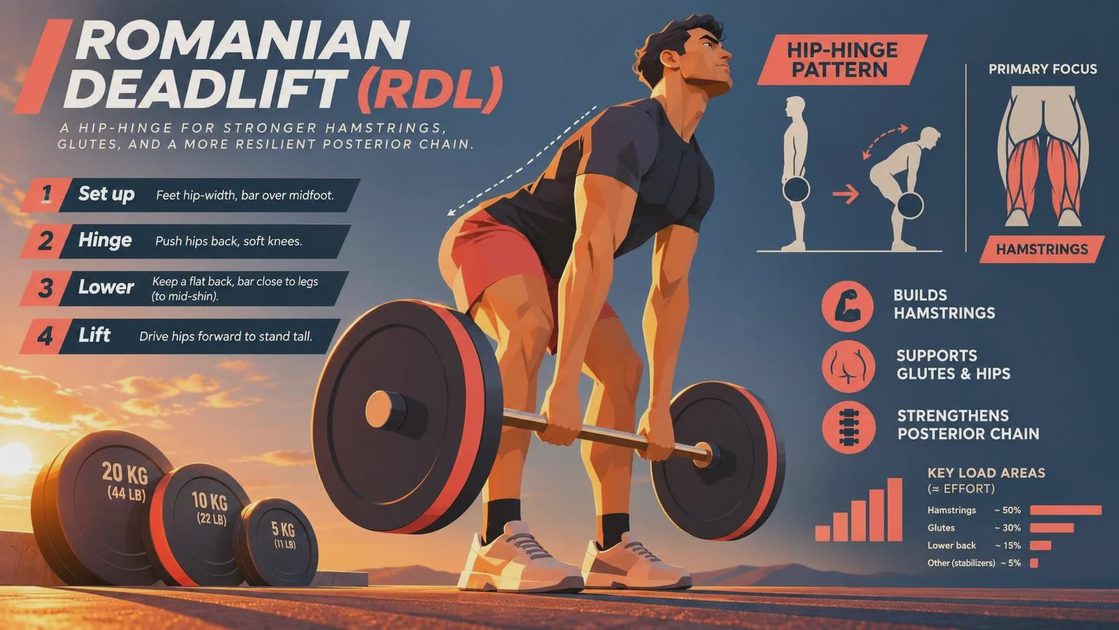
The romanian deadlift loads the muscles on the back side of your body, especially the hamstrings and gluteus maximus. Your lower back works too, but its job is to hold position rather than do all the movement. Your abdominal muscles and upper back also contribute by keeping your torso organized while the weight travels close to your legs.
Unlike a conventional deadlift, you generally begin the romanian deadlift from a standing position. You lower the weight by pushing your hips behind you, then drive your hips forward to return upright. Your knees bend slightly, but they do not keep bending until you are squatting. The goal is tension through the hamstrings, not a dramatic drop toward the floor.
That distinction makes this exercise useful for beginners and experienced lifters alike. You do not need to touch the weights to the ground. Stop when your back wants to round, your knees start bending more, or your hamstrings stop controlling the descent. Range of motion is personal. A clean lift to mid-shin beats an ugly lift to the floor every time.
How to Perform It Without Turning It Into a Back Exercise
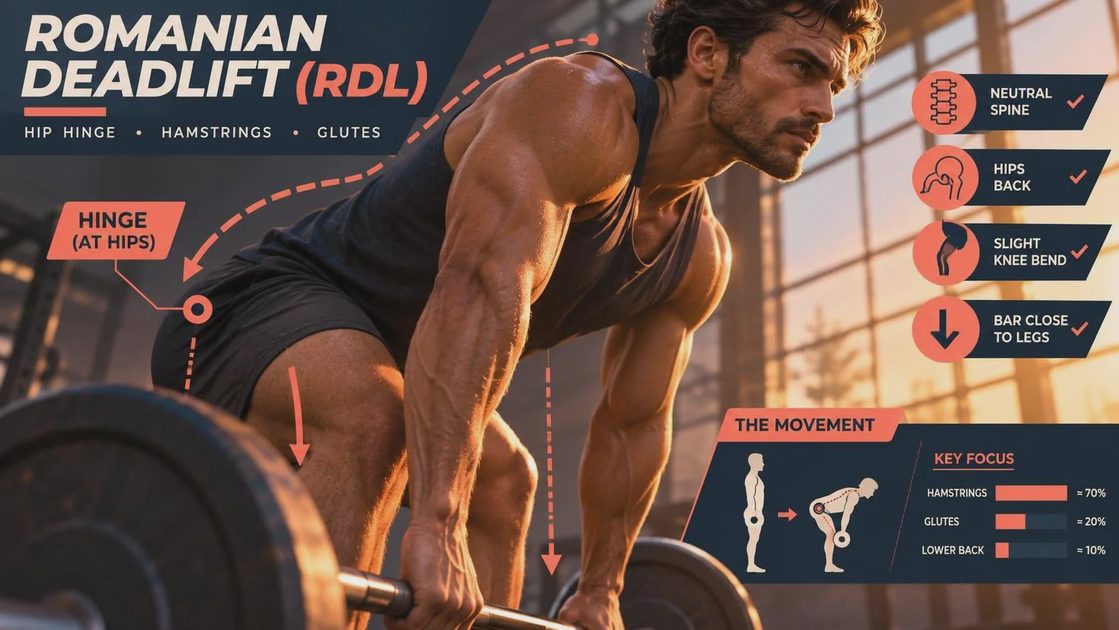
Stand with your feet about hip-width apart and hold a barbell, dumbbells, or kettlebell in front of your thighs. Soften your knees. Pull your ribs down gently, brace your abdomen as if someone is about to poke you, and let your shoulders sit slightly back without squeezing them aggressively.
Now push your hips behind you. Think about closing a car door with your backside. Keep the weight close to your legs as it travels downward. Your neck stays in line with your spine, so you can look at the floor several feet ahead rather than craning your head toward a mirror.
Lower for roughly two to three seconds. When you feel a strong stretch in the hamstrings, pause briefly, then press your feet into the floor and squeeze your glutes to stand tall. Do not lean backward at the top. Standing tall is enough; throwing your ribs forward is not extra credit.
For your first session, use two light dumbbells or an empty bar if your gym has one. Perform three sets of eight repetitions with a weight that leaves about two or three good repetitions in reserve. Your last rep should look like your first. If the final rep turns into a shrugging, twisting negotiation with gravity, the weight is too heavy.
The Most Common Mistakes
The first mistake is squatting the movement. If your knees travel forward and your hips drop, your quadriceps take over and the hamstring stretch disappears. Keep the knees soft but mostly fixed, then send the hips backward. The second mistake is chasing the floor. The exercise is finished when you can no longer maintain a neutral, controlled torso, not when the plates reach an arbitrary depth.
The third mistake is allowing the weight to drift away from your legs. A bar several inches in front of you creates a longer lever and more demand on your lower back. Keep it close enough to brush your thighs and shins. The fourth mistake is rushing. A fast descent hides poor control and makes it harder to learn where your balance and mobility actually limit you.
Finally, do not turn the top into a backbend. Finish with your hips under your shoulders, brace maintained, and glutes contracted normally. If you feel sharp pain, numbness, or pain that changes your movement, stop the set. Muscle effort and a hamstring stretch are expected; nerve-like symptoms are not a badge of commitment.
Sets, Reps, and Progression That Fit Real Life
Train the romanian deadlift once or twice per week, depending on how much other lower-body work you do. A practical beginner plan is three sets of eight to ten repetitions. Rest two minutes between sets. For general strength, three to four sets of five to eight repetitions works well once your technique is consistent. For muscle-building work, two to four sets of eight to twelve is a reasonable range.
Progress does not require adding weight every workout. First, make the same weight look cleaner. Then add one repetition per set within your target range. Once you can complete every set at the top of that range with steady control, increase the load by the smallest useful amount, often five to ten pounds total with a barbell or two to five pounds per dumbbell.
Keep a simple record: weight, sets, repetitions, and one note about form. A person who moves from 30-pound dumbbells for three sets of eight to 35-pound dumbbells for three sets of eight over several months has made real progress, even if the scale has barely changed. Strength is not required to arrive on a dramatic social-media timeline.
Barbell, Dumbbell, or Kettlebell?
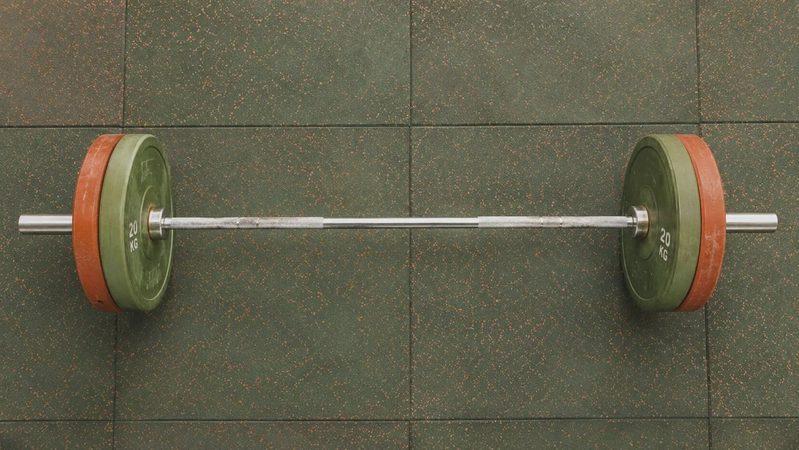
A barbell lets you load the romanian deadlift heavily and progress in small increments. It is a strong choice if you have access to a rack, plates, and enough room to practice. Dumbbells are often more comfortable for home workouts and can expose left-to-right differences. They also require less setup, which matters when you have 25 minutes before work or a child asking for a snack every four minutes.
A kettlebell can be excellent for learning the hinge, especially when you hold it with both hands and keep it close to your body. However, a light kettlebell may become too easy before your hamstrings receive enough challenge. Choose the tool that allows repeatable form and a clear path to progression. Fancy equipment is not a substitute for consistent training.
If gripping the weight is the weak link, use lighter loads while practicing or ask a qualified coach to check your setup. Straps can help in some training situations, but they should not hide a grip problem you want to improve. Your program should match your goal, not whatever equipment happens to be popular this month.
Where It Belongs in a Fat-Loss Plan
The romanian deadlift builds muscle and strength, but it is not a magic fat-loss exercise. Fat loss comes primarily from sustaining an appropriate calorie deficit, while resistance training helps you preserve muscle as body weight decreases. You do not need to punish yourself with endless sets after eating a normal dinner. Eat enough protein, choose mostly filling foods, and train hard enough to give your body a reason to keep its muscle.
Place the lift after your warm-up and before smaller hamstring exercises such as leg curls. A session might include the romanian deadlift, a squat or split squat, a row, and a short walk afterward. That is plenty for a busy adult. If your hamstrings are still painfully sore three days later, reduce the volume or load rather than declaring the exercise dangerous.
My practical assignment is simple: twice this week, practice three controlled sets with a light weight. Film one set from the side if you can, then check whether the weight stays close and your hips move backward. Do not chase soreness. Chase repeatable reps. Eat enough. Train hard. Repeat.
No comments yet — be the first to share a thought.