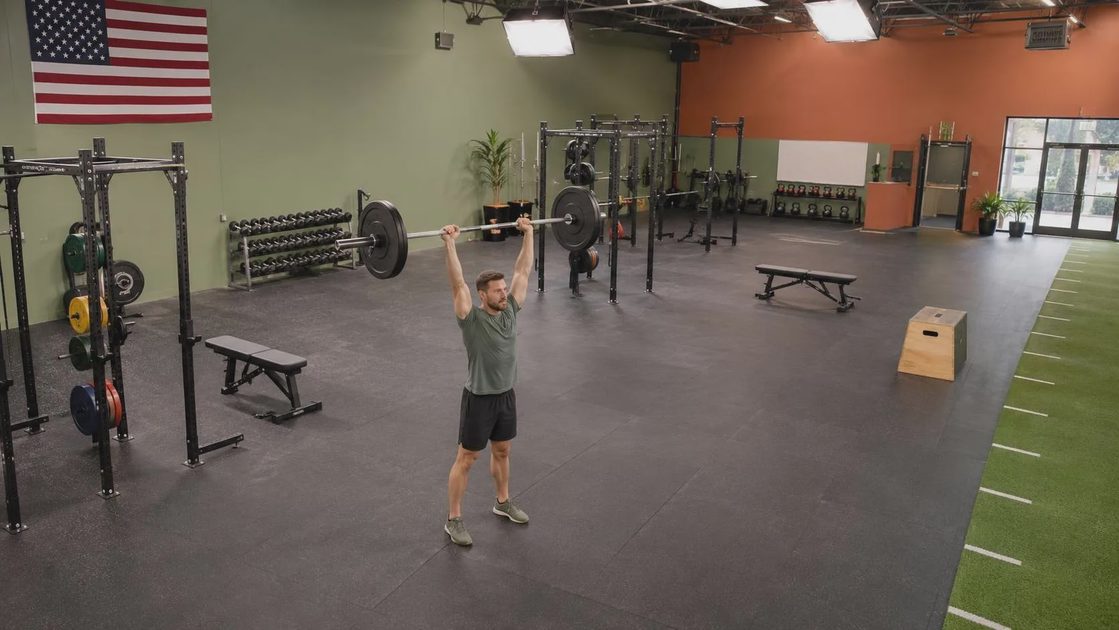
Start with 2 sets of 6 to 10 controlled reps, using a weight you could lift a few more times if you had to. The overhead press builds shoulder and triceps strength by moving a weight from shoulder height to overhead. You can do it with dumbbells or a barbell, standing or seated. For most beginners, light dumbbells are an easy place to learn the movement without committing to the weight of a bar.
Set up and press with control
Stand with your feet about hip-width apart and hold a dumbbell at each shoulder. Keep your wrists roughly stacked over your elbows and your palms facing forward or slightly toward each other. Choose whichever grip lets you move comfortably.
Take a breath, brace your midsection as if someone were about to poke you in the ribs, and press the weights upward. Let your shoulder blades move naturally as your arms rise. Finish with your arms extended overhead, without forcing your shoulders down or leaning backward to get there. Lower the weights under control to roughly shoulder height and repeat.
The weight doesn't need to follow a perfectly straight line. What matters is that it stays balanced over your body and that you aren't turning every rep into a standing backbend. Exhale as you press if that helps you maintain a steady rhythm; avoid holding your breath for a long time, especially if you've been told to manage your blood pressure.
With a barbell overhead press, start with the bar around the front of your shoulders and your hands a little wider than shoulder-width. Move your head slightly back to clear the bar, then bring it forward as the bar passes your forehead. At the top, the bar should be over the middle of your feet, not drifting well out in front.
Pick a version that fits your body
Dumbbells give each arm room to find a comfortable path. They're useful when one side feels less coordinated or when a fixed bar position bothers your shoulders. Start light: even a small dumbbell can feel surprisingly heavy once it gets overhead.
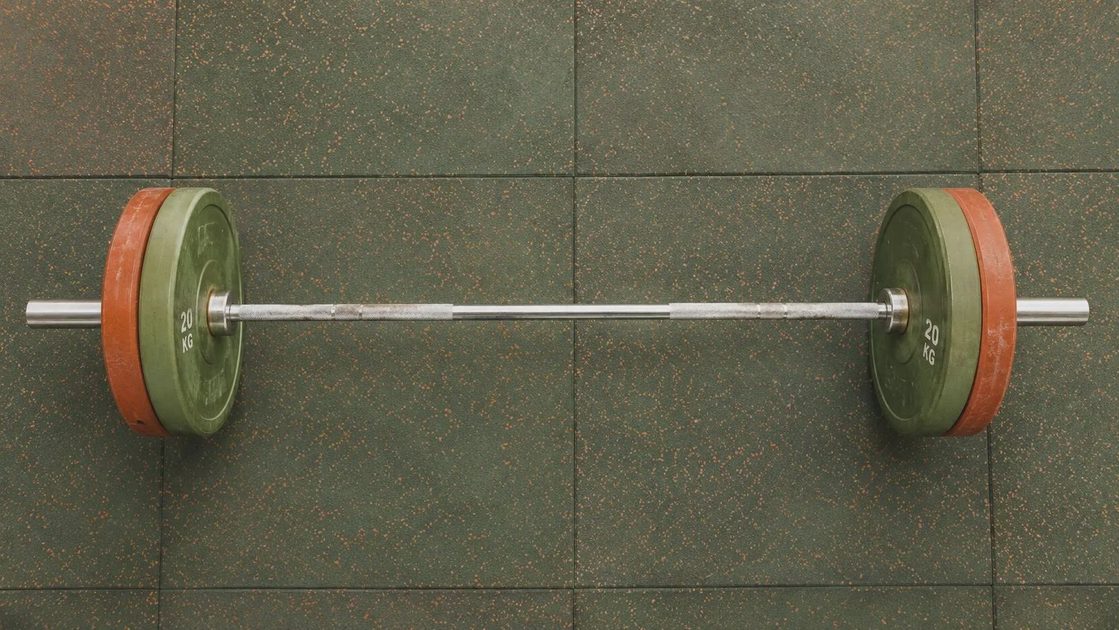
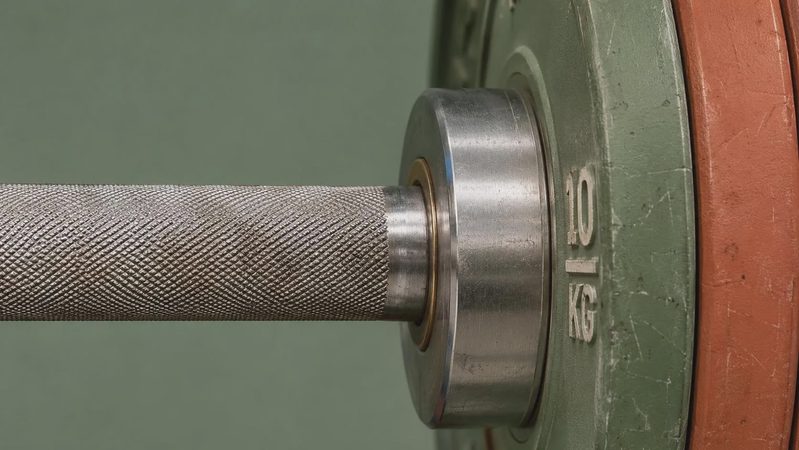
A barbell makes it straightforward to add small amounts of weight over time, but the bar's starting weight may be too much for a beginner. Check the weight rather than assuming every bar is the same. If an empty bar doesn't move smoothly for your planned reps, use lighter dumbbells or another option first.
A seated overhead press can be a good choice if standing balance is the limiting factor. Sit tall with your feet supported and avoid using the backrest as an excuse to arch hard. A machine shoulder press is another practical option when you want a supported, predictable path. Adjust the seat so the handles start around shoulder level, and stop short of any position that causes pain.
None of these variations is a moral achievement. The best one is the one you can perform comfortably and progress over time.
How much weight, and how often?
Choose a weight that lets you finish each set with roughly 2 or 3 good reps left. That means the last rep takes effort, but you could still do a couple more without shrugging wildly or leaning back. Rest about 1 to 2 minutes between sets; take longer if you need it to recover your form.
For a simple starting plan, do the overhead press twice a week with at least a day between sessions. Begin with 2 sets of 6 to 10 reps. Once you can reach 10 controlled reps in both sets, increase the weight by the smallest practical amount and work back toward 10. If the next dumbbell jump is too large, add reps or a set before increasing the load.
Two sessions aren't mandatory. One session a week can still be worthwhile when life gets crowded. Pair your pressing with pulling movements, such as rows, and lower-body work for a balanced routine. If you already do a lot of push-ups or bench pressing, account for that work rather than piling on extra sets just because a program says so.
Fix the mistakes that make pressing harder
A big backward lean usually means the weight is too heavy, your setup needs work, or you don't have a comfortable overhead range that day. Lighten the load, keep your ribs from flaring excessively, and press only as high as you can without compensating. A slight natural arch is normal; a dramatic lean is not the goal.
If your wrists bend far backward, reposition the weight so it sits more directly over your forearm. If the dumbbells drift forward, think about finishing with the weights over your shoulders rather than reaching toward the wall. You shouldn't need to bang the weights together at the top.
Slow the lowering phase enough to stay in control. Dropping the weights to your shoulders and bouncing back up makes it harder to judge whether the load is appropriate. And don't use a knee dip to launch the weight unless you're deliberately doing a push press, which is a different exercise.
What if your shoulder hurts?
Muscle effort and fatigue are expected; sharp pain, pinching, or pain that worsens as you continue is a reason to stop. Try a lighter weight, a palms-facing grip, or a shorter comfortable range. If pressing still hurts, leave it out and talk with a qualified clinician or physical therapist, particularly if pain persists or follows an injury. You don't have to earn your workout by pushing through joint pain.
For fat loss, the overhead press is useful strength training, not a magic calorie burner or a way to spot-reduce arm fat. Keep it alongside a sustainable eating pattern, adequate protein, and other resistance exercises. This week, put two short lifting sessions on your calendar and practice the press with a weight you can control. Eat enough. Train hard. Repeat.

No comments yet — be the first to share a thought.