If you have 30 minutes at the gym, the lat pulldown deserves a place in your plan. The lat pulldown trains the large muscles along your back, teaches you to control your shoulder blades, and gives beginners a practical way to build pulling strength before they can do a pull-up. It is not magic, and it will not burn belly fat by itself. It is simply a useful exercise that works when you perform it consistently.
I have watched clients spend more time adjusting cable attachments than lifting them. Do not turn this into a production. Choose a manageable weight, use a full range of motion, and add a small amount of resistance only when your form stays clean. Eat enough. Train hard. Repeat.
What the lat pulldown actually trains
The primary target is the latissimus dorsi, commonly called the lats. These broad muscles help pull your upper arms down and toward your body. Your biceps, rear shoulders, mid-back muscles, and trunk also contribute. That makes the lat pulldown a compound upper-body exercise, not an isolated arm curl with a fancy handle.
A strong back supports more than appearance. Better pulling strength can help you carry groceries, lift a child, move a suitcase, or maintain control during other resistance exercises. Building muscle also supports your long-term ability to stay active, but do not confuse muscle work with a special fat-loss shortcut. Your calorie intake, daily movement, sleep, and overall training volume still matter more than any single machine.
The machine is especially useful for people who cannot yet perform a bodyweight pull-up. You can train the same general pulling pattern while controlling the load. Someone who weighs 180 pounds does not need to hoist all 180 pounds immediately. The cable lets you start with 50, 70, or 100 pounds, depending on your strength and the machine's pulley system.

Lat pulldown form that does the job
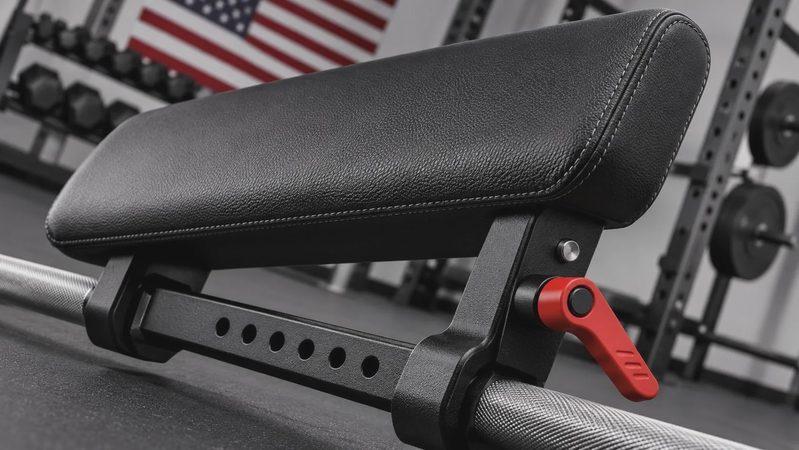
Set the thigh pad so your legs are secure without cutting off circulation. Stand briefly to choose a weight, then sit with your feet flat and your ribs stacked over your pelvis. Grip the bar slightly wider than shoulder width. A very wide grip is not a shortcut to wider lats; it often reduces your usable range of motion.
Before pulling, take a breath and gently brace your midsection. Think about moving your elbows down toward your sides rather than yanking the bar with your hands. Pull the bar toward the upper part of your chest, pause for a moment, and feel your back contract. You do not need to force the bar below your chest or lean backward until you are nearly horizontal.
Let the bar travel upward under control until your elbows straighten and your shoulders move naturally. Do not relax into a painful shrug at the top, but do allow a useful stretch. A repetition should look similar from start to finish. If your torso swings, your knees lift, or the weight stack crashes between repetitions, the load is too heavy.
Sets, reps, and progression
For general strength and muscle building, start with three sets of 8 to 12 repetitions. Choose a weight that leaves roughly two good repetitions in reserve at the end of each set. If you can complete 12 reps with steady control, add the smallest available plate or pin adjustment during your next session. If you reach only six ugly repetitions, reduce the load.
Rest about 90 seconds between sets. Busy parents do not need a complicated program with seven back exercises. Pair the lat pulldown with a lower-body movement, such as a leg press, or with a push exercise, such as a chest press. That keeps the session moving without turning every minute into an exhausting circuit.
Run this approach twice per week if your schedule allows, leaving at least a day between hard back sessions. Start with six weekly working sets for pulling muscles, then increase gradually if recovery is good. Soreness is not the goal. Progress is the goal: more controlled repetitions, slightly more weight, or better consistency over several months.
Common mistakes worth fixing
The first mistake is leaning back too far. A slight backward angle can be fine, but a dramatic lean changes the movement into a row and encourages momentum. Keep your chest comfortably lifted and your pelvis stable. The second mistake is pulling behind the neck. That position does not provide a special benefit and can be uncomfortable for your shoulders. Pull to the front of your body instead.
Another common error is using a death grip. Hold the bar firmly, but do not let your forearms and hands dominate every repetition. Straps are optional for experienced lifters whose grip gives out before their back, but beginners should first learn to control the movement without adding equipment.
People also rush the return. The lowering phase of the lat pulldown is part of the repetition. Take about two seconds to let the bar rise, keeping control rather than dropping the weight. Finally, do not chase a number printed on the machine. Cable ratios and machine designs differ, so 80 pounds at one gym may not feel like 80 pounds at another.
How it fits into a fat-loss plan
The lat pulldown can help you preserve or build muscle while losing weight, but your workout cannot outvote your eating pattern. Aim for a modest calorie deficit rather than a crash diet that leaves you exhausted and ravenous. Include a protein source at meals, such as Greek yogurt, eggs, tofu, chicken, fish, beans, or cottage cheese. A practical target for many active adults is 20 to 40 grams of protein at a meal, adjusted for individual needs.
Add regular walking, cycling, or another activity you can repeat. A 20-minute walk after dinner will do more for your weekly energy balance than one heroic gym session followed by three days on the couch. Strength training two or three times per week, adequate food, and realistic portions are boring. Boring is why they work.
Do not judge success only by the scale. Track your repetitions, the weight used, waist measurements if comfortable, energy, and how your clothes fit. During a calorie deficit, maintaining your performance is often a meaningful win. Losing weight quickly is not automatically better, particularly if it costs you strength and makes the plan impossible to maintain.
A simple plan for this week
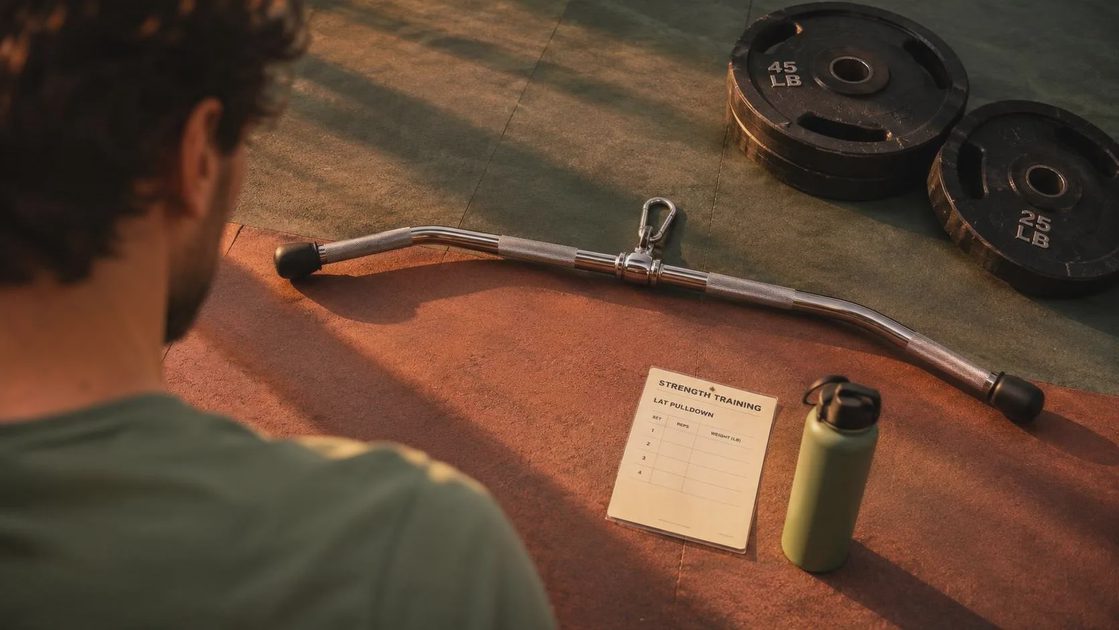
On your next gym visit, warm up with five minutes of easy movement and one light practice set. Then perform three sets of 8 to 12 on the lat pulldown, resting 90 seconds between sets. Write down the machine, weight, repetitions, and any form issue you noticed. Follow it with a row variation and a lower-body exercise if you have time.
Your only job is to repeat that session once more this week or next, depending on your schedule. Do not replace the plan because an influencer demonstrated a new handle or promised a dramatic transformation. If your shoulders hurt, stop and ask a qualified clinician or physical therapist for guidance rather than forcing the exercise.
The lat pulldown is not a shortcut, supplement, or personality test. It is a straightforward tool for building pulling strength. Use a repeatable load, move with control, progress slowly, and support the work with enough food and daily activity. That is how a useful exercise earns its place in a real life plan.
No comments yet — be the first to share a thought.