If your deadlift stalls just below the knees or your lower back feels cooked before your training week is over, block pulls can give you a useful training option. This partial-range deadlift starts with the bar elevated on blocks or sturdy rack pins. You still brace, hinge, grip, and lock out a heavy bar, but you do not begin from the floor. That changes the demand without turning the exercise into magic.
I like block pulls for one reason: they solve a specific problem. They can help you practice the top half of a deadlift, handle more weight with controlled technique, or reduce the mobility demand when pulling from the floor is currently a poor fit. They are not a replacement for every deadlift session, and they will not compensate for sleeping five hours and eating like a bird. Eat enough. Train hard. Repeat.
What block pulls actually train
A standard deadlift asks you to move the bar from the floor to a standing lockout. Block pulls shorten that range of motion. The exact height matters. A bar set just above mid-shin still resembles a conventional pull, while a bar near the knees places much more emphasis on the upper back, glutes, hamstrings, grip, and final lockout.
Because the bar begins higher, your hips may start in a different position and your knees usually travel less. You can often use more weight than in a full deadlift, but that is not a command to load the bar until the plates bend. The shorter range can hide weak positioning. A lifter who jerks the bar from blocks may finish the repetition while practicing poor bracing and losing tension.
Think of block pulls as an accessory lift with a job. If your full deadlift is weak from the floor, lowering the blocks or adding paused deadlifts may be more useful. If you lose position near lockout, a moderate block height can give you repeated practice where the lift breaks down.
How to set up block pulls safely
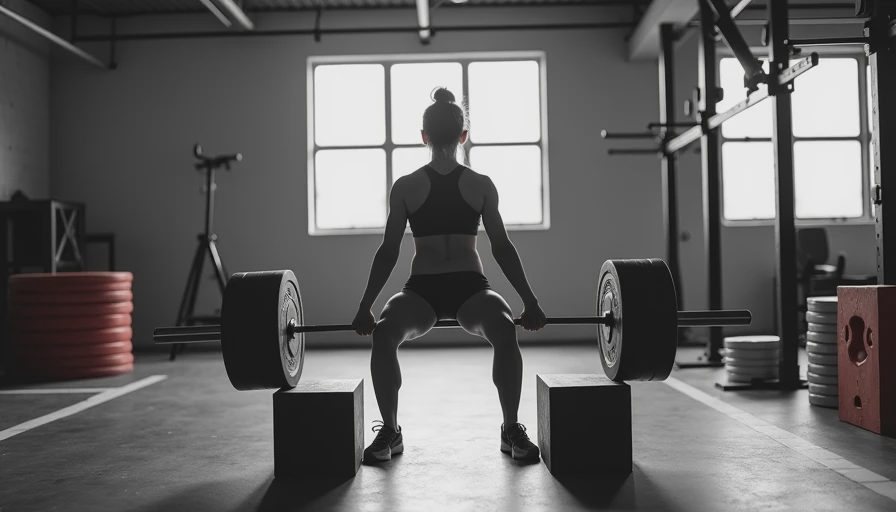
Start with a stable surface. Commercial pulling blocks are ideal, but heavy-duty rubber mats or properly secured rack pins can work. Do not stack loose plates under each side of the bar. A wobbling platform is not a strength challenge; it is a preventable accident.
Set the bar so the plates are level and the height is even on both sides. For most lifters, a starting point around mid-shin is sensible. Load a weight you can move without bouncing, hitching, or leaning backward at the top. Stand with the bar over the middle of your feet, take your normal deadlift grip, pull your ribs down, and create tension before the bar leaves the blocks.
Push the floor away even though your feet are not moving. Keep the bar close to your legs, squeeze your glutes at lockout, and lower the weight under control. The repetition ends when the bar is settled on the blocks. Do not drop it from the top unless your equipment and gym rules specifically allow controlled deadlift drops.
If you feel sharp pain, numbness, or pain that changes your movement, stop the set. Muscle fatigue is part of training; pain that alters your mechanics is information, not a test of character.
Choosing weight, sets, and reps
For block pulls, use heavier loading only after your setup is repeatable. A practical starting prescription is 3 sets of 5 repetitions at a weight that leaves two or three good repetitions in reserve. That usually means the bar moves cleanly, your brace stays firm, and every rep begins from the same position.
For strength-focused work, try 4 sets of 3 repetitions. Rest three to five minutes between sets. For muscle and technique, 3 or 4 sets of 6 to 8 repetitions with two minutes of rest can work well. The goal is not to discover your one-repetition maximum every Thursday. A smooth set of five at 275 pounds is more useful than an ugly single at 335 that teaches you to yank and overextend.
Add 5 to 10 pounds when all prescribed repetitions look similar and you finish with solid control. If your grip opens, your back rounds more each rep, or the bar drifts away from your legs, hold the weight steady or reduce it. Food matters here too: a protein-rich meal and enough total calories support training better than a stimulant-heavy pre-workout routine.
Common mistakes that make block pulls less useful
The first mistake is setting the bar too high. When the plates start near the knees, the exercise may become a short lockout drill rather than a meaningful deadlift variation. That can have a place, but it should be intentional. Lower the blocks if you want more work from the hamstrings and hips.
The second mistake is treating the elevated start as permission to abandon your normal deadlift technique. Do not round aggressively, jerk the bar, or lean back at lockout. More weight is acceptable only when you can still brace and control the bar.
The third mistake is bouncing the bar between repetitions. Bouncing reduces the demand on your muscles and changes your starting position. Reset your feet, grip, breath, and brace for every repetition. That takes a few seconds and gives you much better feedback.
Finally, do not place block pulls after so much heavy lower-body work that your technique is already gone. If they are a main lift, perform them early. If they are an accessory, use lighter loading after squats or full deadlifts.
Who should use this variation?
Block pulls make sense for an experienced lifter who wants to strengthen a sticking point, build confidence with heavier loads, or train around limited starting mobility. They can also suit someone returning to pulling after a break, provided the blocks are low and the weight is conservative.
They are not automatically the best first deadlift exercise for a beginner. A new lifter usually benefits more from learning a controlled hip hinge, bracing, and a full-range deadlift with coaching. Someone with a current back injury should get individualized guidance from a qualified medical professional rather than copying a gym video.
Your body, equipment, and training history determine the right version. A trap-bar deadlift, Romanian deadlift, or paused deadlift may address the same goal with a better fit. Exercise selection is not a personality test. Use the tool that helps you train consistently.
A simple four-week block-pull plan
Train the movement once per week after a thorough warm-up. In week one, do 3 sets of 5 at a moderate weight from mid-shin blocks. In week two, repeat the sets and add 5 pounds only if your technique was steady. In week three, use 4 sets of 3 with a slightly heavier load. In week four, return to 3 sets of 5 at the week-two weight and judge the quality of your movement.
Pair the work with a few straightforward exercises: hamstring curls for 3 sets of 10, chest-supported rows for 3 sets of 8, and farmer carries for 3 controlled trips. Do not turn the session into a two-hour punishment circuit. Leave the gym with enough energy to recover, feed yourself, and train again.
Track the block height, weight, repetitions, rest time, and a quick note about technique. After four weeks, you should know whether block pulls improved your lockout, confidence, or tolerance for pulling volume. If nothing changed, adjust the height or choose a different accessory instead of forcing the lift forever.
The boring answer wins: use block pulls for a clear purpose, load them responsibly, and keep full-range deadlifts in your program when they fit. Strength comes from repeated quality work, not from chasing the biggest number in the room. Eat enough. Train hard. Repeat.

No comments yet — be the first to share a thought.