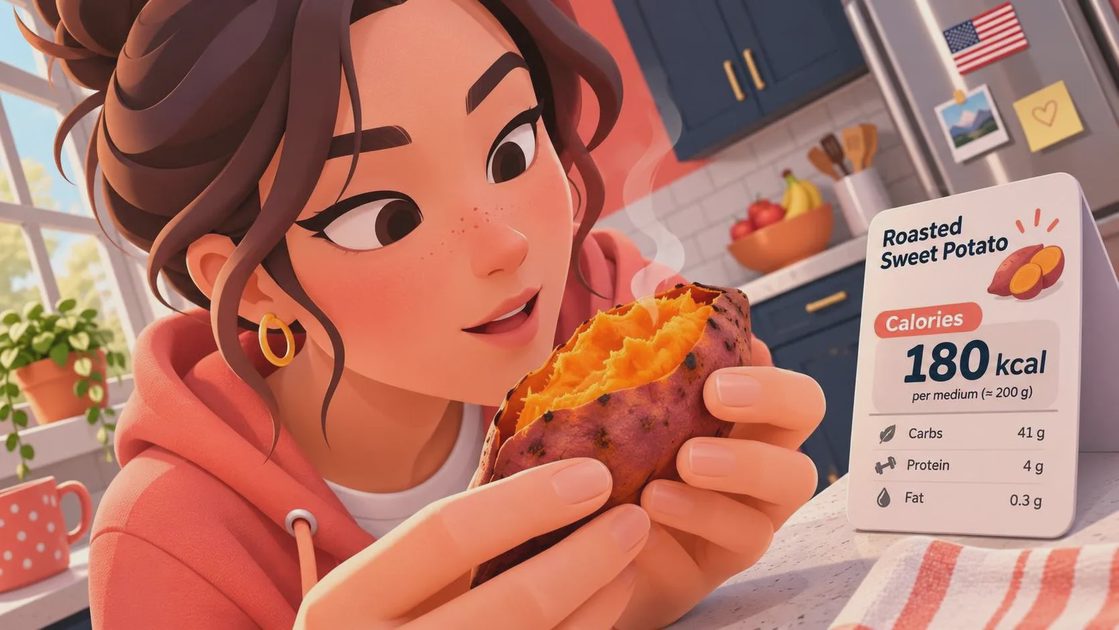
A plain baked sweet potato has about 90 calories per 100 grams, or roughly 160 calories for a medium-to-large 180-gram portion. Sweet potato calories vary with size, cooking method, and what you add, so think of those numbers as useful estimates, not a nutrition pop quiz. You don't need to cut this food out to lose fat. You need a portion that fits your meal and keeps you satisfied.
Sweet potato calories by portion and preparation
For a plain sweet potato baked in its skin, these are reasonable estimates based on the edible cooked portion:
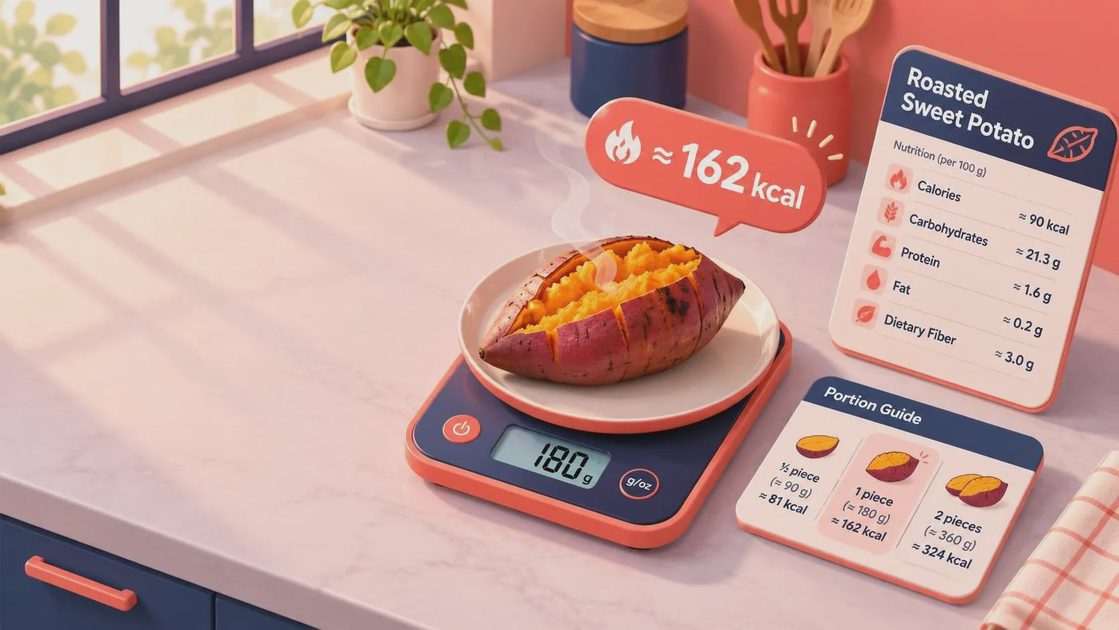
A 100-gram serving has about 90 calories. A 150-gram serving has about 135 calories. A 200-gram serving has about 180 calories. A whole potato can fall above or below those amounts, so the number on your plate matters more than whether the produce bin called it medium or large.
Boiled sweet potato generally has fewer calories per 100 grams than baked because it retains more water. An estimate of about 75 to 80 calories per 100 grams is reasonable for plain boiled sweet potato. That doesn't mean boiling removes calories from the potato; it means you're comparing different amounts of water alongside the food.
Fries, casseroles, and mashed versions are different stories. Oil, butter, sugar, and other ingredients add energy, sometimes substantially. Restaurant portions and packaged products vary, so use the label or restaurant information when it's available rather than assuming a baked-potato entry covers the whole dish.
How to track sweet potato calories without guessing
If you track food, weigh the portion you're actually eating and choose an entry that matches how it was prepared. Put your cooked potato on a kitchen scale, record the grams, and select a plain baked or boiled entry as appropriate. If you eat the skin, use an entry that includes it.
Don't weigh a raw potato and then log that same number of grams as cooked. Water changes during cooking, so raw and cooked weights aren't interchangeable. You can weigh it raw and use a raw entry, or weigh it cooked and use a cooked entry. Either approach works; consistency is the point.
If you cook a batch, divide it into portions after cooking or weigh the amount you serve yourself. You don't need a scale forever. Use one for a few days if you want to learn what your usual portion looks like, then decide whether measuring is still helpful. If tracking makes eating more stressful, a visual portion and a regular meal routine are perfectly reasonable alternatives.
Toppings can change the math
The potato is only one part of the meal. A tablespoon of olive oil adds about 120 calories, and a tablespoon of butter adds about 100. If you roast several potatoes with oil, account for the oil used across the batch rather than adding a full tablespoon to every serving by default. Some oil may remain on the pan, so the final number will still be an estimate.
For a baked potato, cinnamon, salsa, herbs, or a squeeze of lime add flavor without a large calorie bump. Want butter or cheese? Use them. Just include a reasonable estimate if you're tracking sweet potato calories and trying to understand why your daily total differs from what you expected.
Watch the extras on sweetened casseroles, too. Marshmallows, brown sugar, and butter all contribute calories. That doesn't make a holiday dish a problem; it means its nutrition won't match a plain potato entry. Enjoy the dish and move on to your next normal meal.
Carbs, fiber, and nutrients: what you're actually eating
A 100-gram serving of plain baked sweet potato provides roughly 20 to 21 grams of carbohydrate and about 3 grams of fiber. It has a little protein but isn't a substantial protein source. Orange-fleshed varieties also provide beta-carotene, which the body can convert to vitamin A. Different varieties and preparations won't have identical nutrient profiles.
Carbohydrates are not a fat-gain switch. They provide energy, including for training, and a sweet potato can fit before or after a workout just as rice, oats, or regular potatoes can. For fat loss, your overall intake over time matters more than whether your carbohydrate came from one particular vegetable.
Fiber can help a meal feel more satisfying, but a potato alone may not keep you full for long. Pair it with protein and add vegetables or fruit. For example, serve a baked sweet potato with chicken or beans and a generous helping of broccoli. Or add eggs and spinach to a portion of leftover roasted sweet potato for breakfast.
Are sweet potatoes better than white potatoes for weight loss?
Neither wins the fat-loss trophy. Plain sweet and white potatoes can both fit a balanced eating pattern, and their calorie counts depend on size and preparation. Sweet potatoes generally offer more beta-carotene when their flesh is orange; white potatoes offer useful nutrients too, including potassium. Choose the one you enjoy and will actually eat.
Preparation usually matters more than the name. A plain baked potato and a serving of fries cooked with oil are not equivalent meals. Compare similar cooked weights and include toppings before deciding that one option is dramatically lighter.
One change to make this week
Pick one meal you already eat and add a measured serving of plain sweet potato alongside a protein you like. Try 150 grams baked, about 135 calories, with beans or chicken and a vegetable. If you usually add oil or butter, measure that too. Then pay attention to whether the meal keeps you comfortably satisfied until your next planned meal.
That is enough information to make a useful adjustment. You can increase the portion if you're hungry, reduce it if the meal is more than you need, or choose another carbohydrate entirely. Sweet potato calories are a tool for planning, not a grade on your eating. Eat enough. Train hard. Repeat.



No comments yet — be the first to share a thought.