Avocado calories are about 160 per 100 grams of edible flesh. That puts a 50-gram serving at roughly 80 calories and a tablespoon of mashed avocado at about 25 calories. A whole avocado can land around 200 to 300 calories or more, depending on its size. The useful number is the weight of the flesh you eat, not the weight of the peel and pit.
Avocado can absolutely fit into a fat-loss plan. It provides fiber and mostly unsaturated fat, and it can make a meal satisfying. It is also calorie-dense enough that a generous scoop can change the math. Neither fact makes it a problem food.
Avocado calories by portion
Use these as starting estimates for plain avocado flesh. The numbers are rounded, and the size and variety of the fruit will make a difference.
One tablespoon, mashed, weighs roughly 15 grams and has about 25 calories. One quarter cup, mashed, is approximately 55 to 60 grams and has about 90 calories. A 50-gram portion has about 80 calories; a 100-gram portion has about 160.
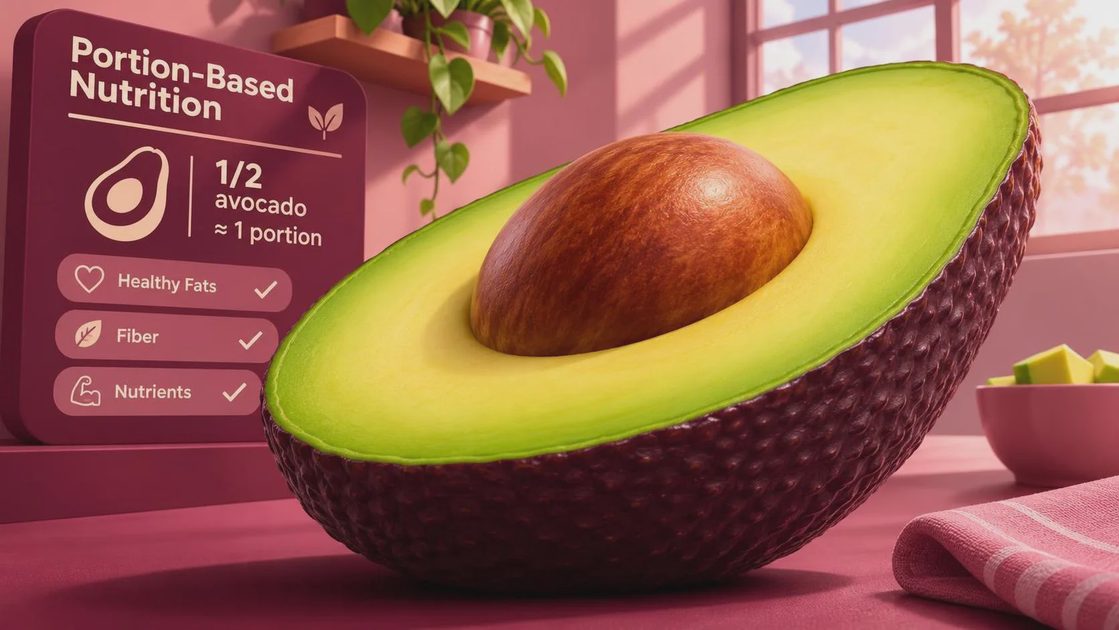
Half an avocado is a less precise measurement. If the edible flesh from a whole fruit weighs 150 grams, half is about 75 grams and provides roughly 120 calories. If the flesh weighs 200 grams, half is 100 grams and provides about 160. That difference is why a food log entry labeled simply “half an avocado” can be a rough guess.
The same goes for a whole fruit. At 150 grams of flesh, it is about 240 calories. At 200 grams, it is about 320. A small avocado and a large one do not have interchangeable calorie counts just because each has one pit.
How to measure without making lunch a project
For a more accurate count, put your plate or bowl on a kitchen scale and reset it to zero. Add the avocado flesh you plan to eat, read the grams, and multiply by 1.6 for an approximate calorie count. For example, 70 grams multiplied by 1.6 is about 112 calories.
You can also weigh the flesh after removing the skin and pit, then portion it out. There is no need to weigh an avocado every time you eat one. Measure a usual serving once or twice if you want to see what it looks like, then decide whether that level of precision is useful to you.

If you use a tracking app, look for an entry in grams for raw avocado rather than relying on “one medium.” Check that the entry refers to edible flesh. Database entries can vary, so a number close to 160 calories per 100 grams is a sensible reference for plain avocado.
What else is in avocado?
A 100-gram portion supplies roughly 15 grams of fat and 7 grams of fiber, along with vitamins and minerals, including potassium and folate. Most of its fat is monounsaturated. Exact amounts vary with the fruit and the portion.
That combination can add texture and staying power to a meal, but avocado is not a meaningful substitute for a protein-rich food. A 100-gram serving has only around 2 grams of protein. If lunch is toast and avocado, adding eggs, cottage cheese, tofu, or another protein source can make the meal more substantial.
Fiber is another reason to look beyond avocado calories alone. Fiber contributes to digestive health and can help a meal feel filling. But an avocado does not magically cancel out other calories, and you do not need to eat one to get fiber. Beans, lentils, fruit, vegetables, and whole grains are useful options too.
Can you eat avocado while losing fat?
Yes. Fat loss generally requires a calorie deficit over time, but that does not mean every food needs to be low in calories. The question is whether your usual portions and meals fit an eating pattern you can maintain while meeting your nutritional needs.
Say you enjoy avocado on a sandwich. You might use a measured portion instead of adding both a thick layer of avocado and a generous amount of mayonnaise. Or you might keep both and adjust something else if the meal leaves you overly full or routinely exceeds the amount you intended to eat. You do not have to remove either ingredient on principle.
If tracking avocado calories makes sense for your goals, count the portion you actually add. If tracking makes eating stressful or obsessive, skip the scale and build meals around foods you enjoy, including protein and fiber. A registered dietitian can help tailor an approach to your health and circumstances.
Guacamole, oil, and restaurant portions
Plain mashed avocado and guacamole are not necessarily the same calorie entry. Tomatoes, onions, lime, and herbs can change the weight of a serving without adding much energy, while ingredients such as oil can raise the calorie count. For packaged guacamole, check the label and serving size. For homemade guacamole, estimate from the ingredients and the share you eat.
Avocado oil is different again. It is almost entirely fat, with about 120 calories per tablespoon, and it does not provide the fiber found in the whole fruit. Use it as a cooking fat if you like it, but do not log a tablespoon of oil as a tablespoon of mashed avocado.
At a restaurant, portions are harder to judge. A scoop may contain more or less than the amount you use at home, and a dish may also include oil, cheese, or dressing. If nutrition information is available, use it as an estimate. Otherwise, make your best reasonable guess and move on; one imperfect entry will not determine your progress.
One useful change this week
Pick one meal where you regularly add avocado. Measure your usual portion once, without trying to make it smaller first. Note the grams, calculate the approximate calories, and notice whether that amount makes the meal satisfying.
Then keep it, adjust it, or stop measuring based on what helps you build a routine you can repeat. Avocado calories are information, not a judgment. Eat enough. Train hard. Repeat.

No comments yet — be the first to share a thought.