Start with 2 sets of 8 controlled reps, twice a week, using a weight you can lift without jerking your torso. The barbell row trains your upper back and lats, with help from your arms and the muscles that hold your trunk steady. It’s a useful strength exercise, not a magic fat-loss move. If a barbell feels awkward or too heavy, start with a dumbbell or cable row instead.
Set up and perform the barbell row
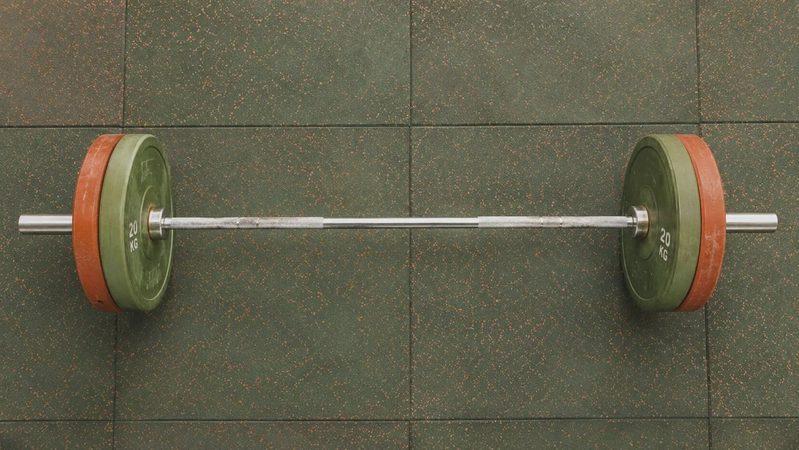
Stand with your feet roughly hip-width apart and the bar over the middle of your feet. Grip the bar just outside your legs, palms facing you. A standard Olympic bar can be heavy on its own, so use a lighter fixed-weight bar or another variation if you can’t control it comfortably.
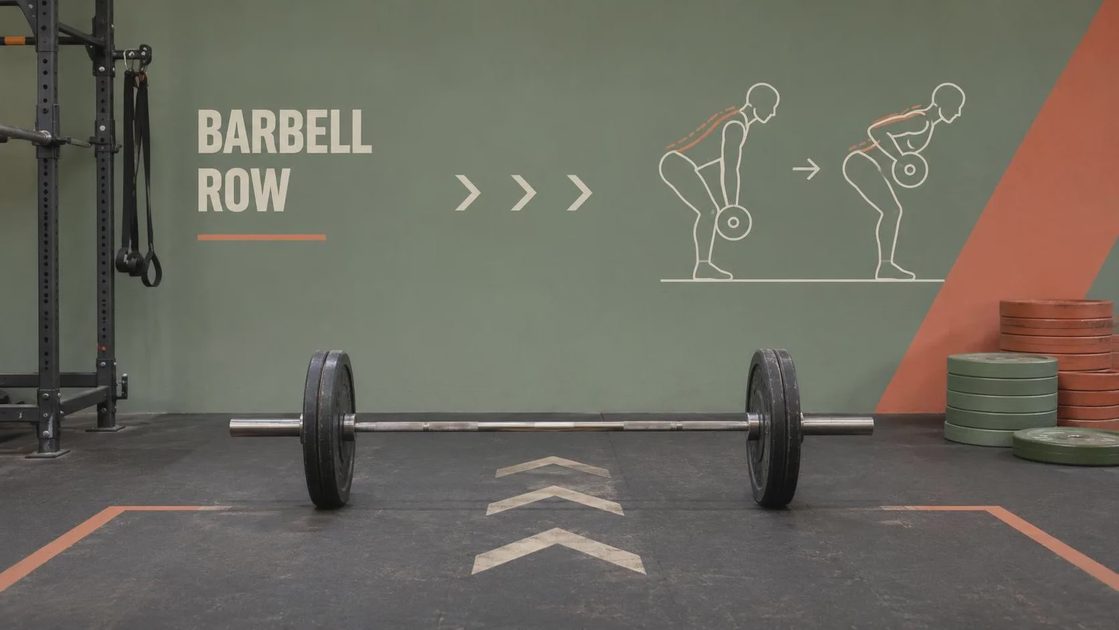
Soften your knees and push your hips back as if you’re closing a car door with your backside. Let your torso tip forward while keeping your back in a comfortable, neutral position. Your chest will face partly toward the floor, not straight ahead. Brace your midsection as though someone is about to poke you in the ribs.
With the bar hanging below your shoulders, pull it toward your lower ribs or upper abdomen. Let your elbows travel back, keeping them at a comfortable angle rather than pinning them tightly to your sides. Pause briefly near your body, then lower the bar under control until your arms are extended. Repeat without standing up between reps.
You don’t need to get your torso perfectly parallel to the floor. A slightly more upright hinge is fine if it lets you maintain your position and move through a comfortable range. Set the bar down safely when your set is finished; you can start from a rack or raised supports if lifting it from the floor is awkward.
Choose a weight and make progress
For your first barbell row session, choose a load that leaves you feeling you could do about 2 to 3 more clean reps at the end of each set. If you’re guessing, guess light. Your first job is to learn the hinge and keep your torso steady, not impress the person using the next rack.
Do 2 sets of 8 to 12 reps, resting roughly 1 to 2 minutes between sets. Two sessions a week, with at least a day between them, is a practical starting point. If you already do plenty of pulling exercises, one session may fit better. Consistency beats a perfect schedule that falls apart by Thursday.
Once you can complete 12 controlled reps in both sets, add a small amount of weight next time and work back toward 8 reps. Even a modest jump can feel substantial on an upper-body exercise. If your gym doesn’t have small plates, add reps or improve control before increasing the load.
Hard sets are useful; sloppy sets aren’t a badge of honor. Stop the set when you have to heave the bar, repeatedly shorten the movement, or lose your comfortable back position. It’s fine for the last couple of reps to feel challenging. They should still look recognizably like the first few.
Common mistakes that make the barbell row harder
The biggest one is turning the movement into a standing shrug. If your torso rises sharply to get the bar moving, reduce the weight and reset your hinge. A little natural movement is different from using your whole body to launch every rep.
Another mistake is pulling the bar toward your chin or flaring your elbows so far that your shoulders feel pinched. Aim lower, experiment with a comfortable grip width, and let your shoulder blades move naturally. You don’t need to squeeze them together as hard as possible or freeze them in place.
Finally, don’t crane your neck to watch yourself in the mirror. Look at a spot on the floor a few feet ahead so your head stays roughly in line with your torso. If your grip gives out before your back gets much work, lower the weight and build up gradually; lifting straps are an option later, not a requirement.
What muscles does it work, and will it help with fat loss?
The row works the lats and several upper-back muscles, including the rhomboids and middle trapezius. Your biceps help bend your elbows, while your trunk and hip muscles work to hold your hinged position. Exactly where you feel it depends on your grip, body position, and individual anatomy. You don’t need a dramatic muscle burn for a set to count.
Strength training can help you maintain or build muscle while losing weight, but a barbell row won’t selectively burn fat from your back. Fat loss depends on your overall energy balance over time. Pair resistance training with meals you can sustain, enough protein, and a modest calorie deficit if weight loss is your goal. No crash diet required.
For a simple full-body session, combine a row with a squat or leg press, a press, and a hip-dominant movement. You don’t need six back exercises. Two or three work sets of a pull, performed consistently alongside the rest of your program, can be a useful place to start.
Alternatives for comfort and access
A one-arm dumbbell row lets you support yourself with your free hand on a bench or sturdy surface. A seated cable row offers another option without requiring you to hold a long hip hinge. A chest-supported row reduces the demand of maintaining that unsupported position. All three can train your back effectively; the bar is a tool, not a test of character.
Mild muscular effort is expected. Sharp pain, spreading pain, dizziness, or symptoms that persist after the set are reasons to stop rather than push through. If you have an injury or a condition that makes lifting uncertain, ask a qualified health professional or physical therapist for guidance tailored to you.
This week, pick one row variation and put two sessions on your calendar. Start light, write down your sets and reps, and build from there. Eat enough. Train hard. Repeat.

No comments yet — be the first to share a thought.