One large egg has about 72 calories and 6 grams of protein. That’s the starting point for egg calories before you add butter, oil, cheese, or toast. Two large eggs give you roughly 144 calories and 12 grams of protein. Boil or poach them without added fat, and the calorie count stays about the same; fry them in a tablespoon of oil and the meal can climb by roughly 120 calories if you eat all the oil.
Egg calories by size
Size matters, though not enough to make breakfast a math exam. These are approximate calories for one whole egg without added ingredients:
A small egg has about 54 calories. A medium egg has about 63, a large egg about 72, and an extra-large egg about 80. A jumbo egg has roughly 90 calories. Individual eggs vary, and nutrition labels may round differently.
Most recipes and tracking apps default to a large egg. If your carton says jumbo and you eat two every morning, choosing the right size gives you a more useful estimate. If you’re cooking a single medium egg, the difference is small enough that I wouldn’t lose sleep over it.
Those numbers are for the edible egg, not the shell. If you weigh an egg for precise logging, crack it first and weigh the contents. For most people, selecting the carton size is plenty accurate.
Egg calories in whites and yolks
One large egg white has about 17 calories and roughly 3.5 grams of protein. The yolk has about 55 calories and roughly 2.7 grams of protein. The yolk also contains most of the egg’s fat, along with nutrients including choline and vitamin A. Whites aren’t nutritionally worthless, and yolks aren’t something you need to fear.

Want more protein without adding much energy? Combine whole eggs and whites. Two large eggs plus two large whites provide roughly 178 calories and 19 grams of protein before cooking fat. You get the flavor and nutrients of the yolks with an extra protein boost. Use more or fewer whites according to your appetite; there’s no magic ratio.
Liquid egg whites make a convenient shortcut. Check the carton for serving size and calories, since a pour is harder to count than two separated eggs. Egg substitutes and seasoned products can contain other ingredients, so their labels may differ from plain whites.
How cooking changes egg calories
The egg doesn’t become a calorie bomb because it touched a pan. The additions are what change the math.
A boiled or poached large egg is still about 72 calories. A fried large egg starts there too, but its total depends on how much cooking fat ends up on your plate. One teaspoon of oil adds about 40 calories; one teaspoon of butter adds about 34. A tablespoon is three teaspoons, so that’s roughly 120 calories for oil or 100 for butter.
You won’t necessarily eat every bit of fat in the pan. For a practical estimate, measure what you add and consider what remains behind. If you split a measured tablespoon of oil evenly between two servings, that’s roughly 60 calories per serving if all of it is eaten. Cooking spray can help reduce added fat, but a long spray isn’t necessarily calorie-free just because a label rounds a tiny serving to zero.
Scrambled egg calories depend on the recipe. Two large eggs scrambled without additions are about 144 calories. Add a tablespoon of whole milk and the increase is small, around 9 calories; add an ounce of cheddar and you’re adding roughly 110 calories. Neither addition is a problem. Count it if the total matters to you.
A filling egg meal for fat loss
Eggs can fit into a fat-loss plan, but they don’t cause fat loss on their own. Over time, weight change depends on your overall energy balance, and a useful eating plan is one you can stick with without feeling miserable.
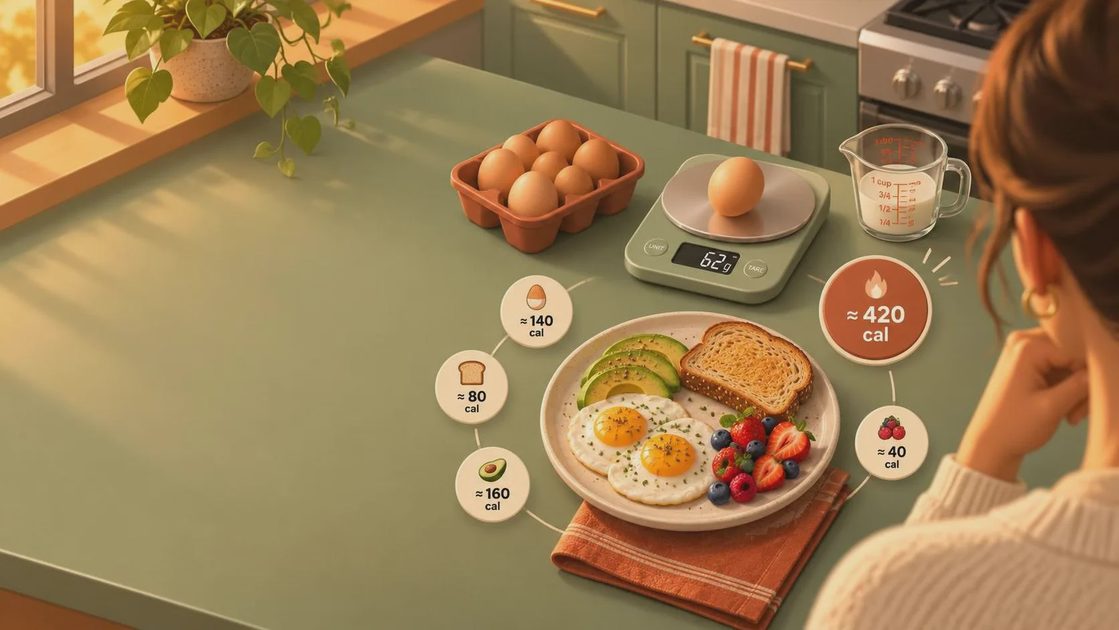
Build a meal rather than relying on two eggs to hold you until dinner. Try two large eggs, a slice of whole-grain toast, and fruit, or add potatoes and vegetables to a scramble. Those foods add calories, but they also add volume, carbohydrate, fiber, or a mix of all three. That can make the meal more satisfying and help fuel a busy day or a workout.
If you train, consider your protein across the whole day rather than treating breakfast as the only meal that counts. Two eggs provide about 12 grams; adding egg whites, Greek yogurt, or another protein food can bring the meal up if that suits your needs. You don’t need to force down a giant breakfast to make progress.
What about cholesterol and food safety?
One large egg contains roughly 185 milligrams of cholesterol, almost all in the yolk. Dietary cholesterol does not affect everyone’s blood cholesterol in the same way, and the rest of your eating pattern matters too. If you have high LDL cholesterol, diabetes, familial hypercholesterolemia, or specific medical advice about eggs, talk with your clinician or dietitian about what fits your situation. There isn’t one egg limit that works for everyone.
For safety, refrigerate eggs and cook them until the yolks and whites are firm. Dishes containing eggs should reach 160°F. If you want a recipe with raw or lightly cooked eggs, use pasteurized eggs or egg products, especially when serving someone at higher risk of foodborne illness.
The one change to make this week
Measure the cooking fat you use for your usual eggs once. Not forever, and not because butter is bad. Just learn what your normal pour or pat looks like, then log the egg size and additions if you track food. That small bit of information is more useful than cutting out a food you enjoy over a handful of calories.
Eat enough. Train hard. Repeat.


No comments yet — be the first to share a thought.