You don't need a meal plan. You need a template.
Here's the problem with meal plans: they work perfectly until Tuesday hits—you forget to thaw the chicken, your kid gets sick, or you just don't feel like eating salmon again. Then the plan falls apart, and you feel like you failed.
You didn't fail. The plan was brittle.
What actually survives a Tuesday is a template. A visual, flexible rule that works whether you're cooking at home, ordering takeout, or eating at a friend's house.
Here it is:
The 2:1:1 Plate Rule
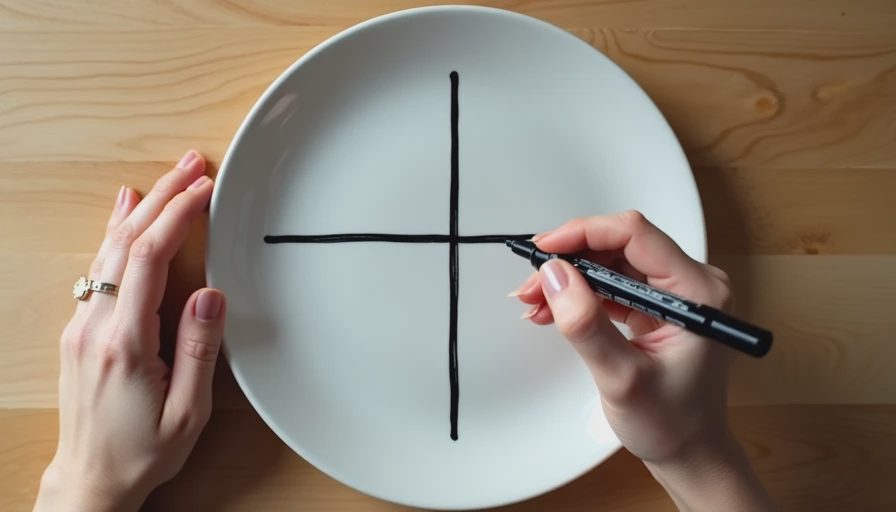
Grab a dinner plate. Divide it into four quarters.
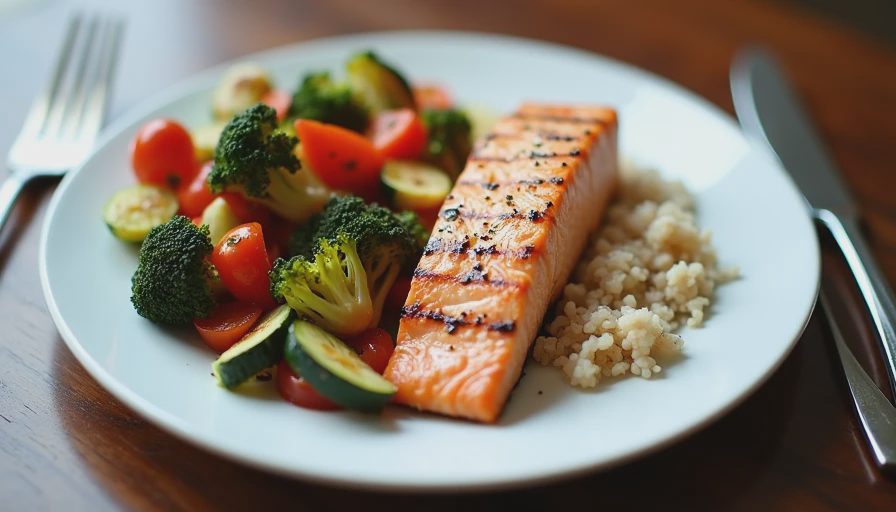
Half the plate (2 quarters): vegetables
One quarter: protein
One quarter: carbohydrates
That's it. Two parts vegetables, one part protein, one part carbs.
I didn't make this up. It's adapted from the Harvard Healthy Eating Plate—a framework developed by nutrition experts. It's not a diet. It's a visual guide that works for every meal, every cuisine, every budget.
What Goes Where
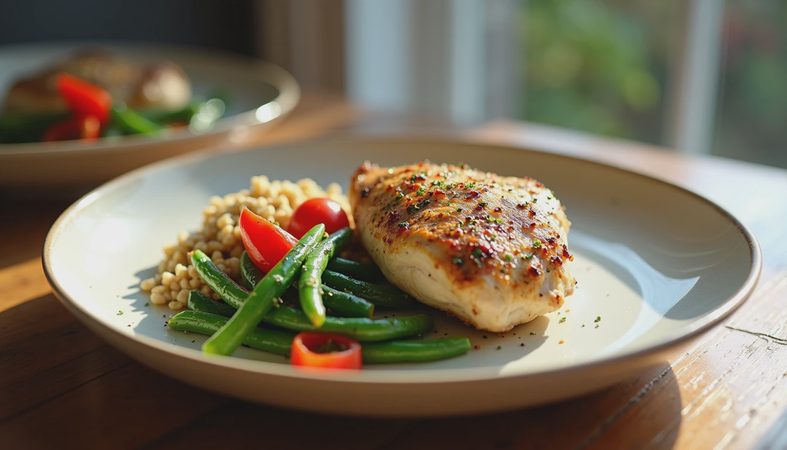
Vegetables (half the plate): Non-starchy ones. Spinach, broccoli, bell peppers, zucchini, cauliflower, asparagus, salad greens. Not potatoes, not corn, not peas—those are starches (they go in the carb quarter).
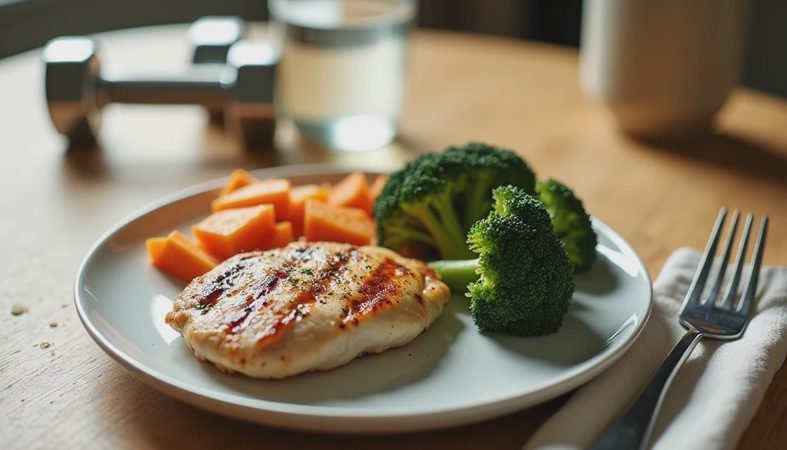
Protein (one quarter): About one palm-sized portion—20-30 grams. Chicken, fish, eggs, tofu, lean beef, lentils, Greek yogurt. This protects your muscle in a deficit and keeps you full. Non-negotiable.
Carbs (one quarter): About one fist-sized portion. Brown rice, quinoa, sweet potato, oats, whole-grain pasta, beans. Complex carbs fuel your training. Your brain runs on them. Don't skip them.
The 60-Second Check
Before you eat, ask yourself three questions:
Is half my plate covered in vegetables?
Is there a palm-sized portion of protein?
Is there a fist-sized portion of complex carbs?
Three yeses? You're done. That's a fat-loss plate.
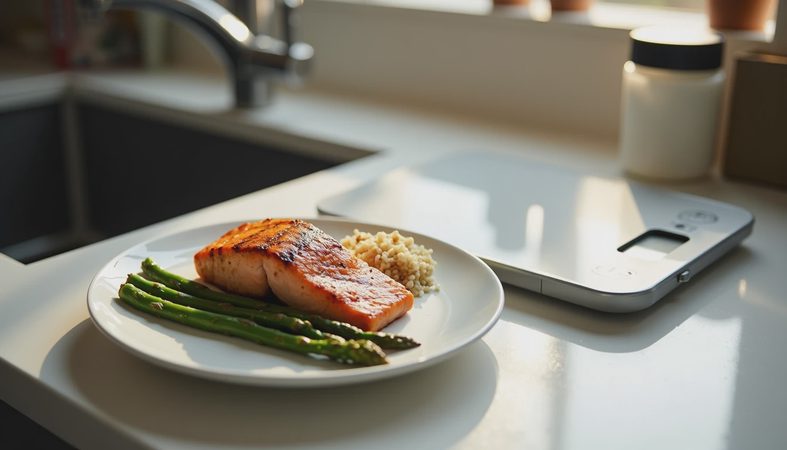
No scale. No app. No spreadsheet.
Real-Life Application
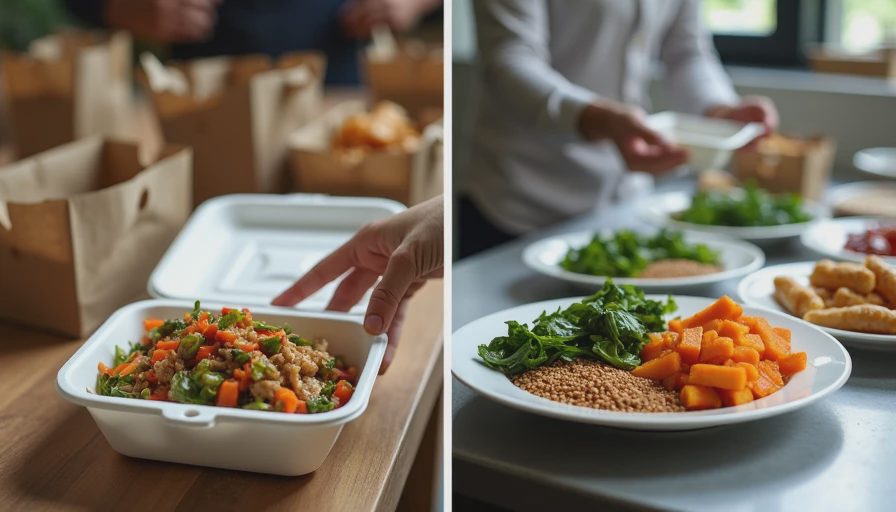
Cooking at home: Pick a protein, pick a vegetable (or two), pick a carb. Cook simply—roast, steam, sauté, grill. Plate it 2:1:1.
Ordering takeout: Stir-fry? Extra veggies, light sauce. Burrito bowl? Double veggies, half rice, extra beans or meat.
Eating out: Fill half your plate with whatever vegetables are available. Take a reasonable protein portion. Small starch. Don't overthink it.
Three Details That Actually Matter
Watch the cooking method. Grilled, roasted, steamed, baked = good. Fried, breaded, creamy, glazed = not good.
Eat in order. Vegetables first, then protein, then carbs. Slows the glucose spike, keeps you full longer.
Don't drink your calories. Juice, soda, sweetened coffee, alcohol—they don't show up on your plate, but they show up on your waistline. Stick to water, unsweetened tea, or black coffee.
Your One Change for This Week
Don't change everything. Change one thing.
This week: Build every lunch and dinner using the 2:1:1 plate rule. Don't track calories. Don't weigh anything. Just look at your plate before you eat and ask: Is this 2:1:1?
If it's not, adjust. Add more vegetables. Swap white rice for brown. Make the protein portion a little bigger.
Do this for seven days. By next week, it'll be automatic. And that's when real progress starts—not when you're following a rigid plan, but when you've internalized a template that works for the rest of your life.
No comments yet — be the first to share a thought.