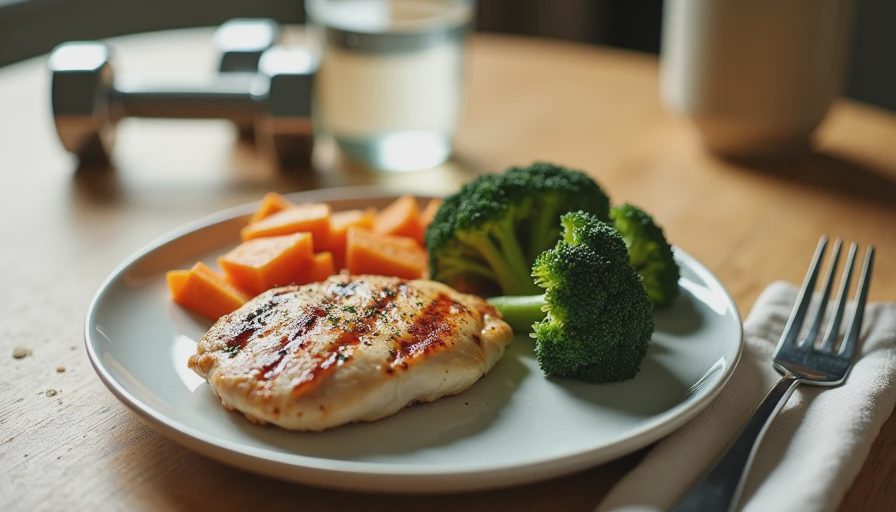
One of the most common ways people sabotage fat loss is by eating too little.
They create a large calorie deficit, feel virtuous about the restriction, and then wonder why their strength is dropping, recovery is poor, hunger is constant, and progress has stalled. In many cases the scale stops moving—or worse, starts climbing again—precisely because the deficit became too aggressive.
If you are strength training while trying to lose fat, undereating is especially costly. Training provides the signal to keep muscle. Food provides the resources to respond to that signal. Remove too much fuel and the signal gets ignored.
What “Eating Enough” Actually Means
Eating enough does not mean eating at maintenance or in a surplus while claiming to lose fat. It means creating a moderate deficit that still supports:
Training performance
Recovery between sessions
Muscle retention
Reasonable energy and mood
Hormonal function over time
For most people this looks like a daily deficit of roughly 300–500 calories below estimated maintenance, paired with high protein intake. Larger deficits can produce faster scale drops in the short term, but they increase muscle loss, fatigue, and the likelihood of rebound.
How Undereating Shows Up in Real Life

The signs are often dismissed as normal parts of dieting:
Strength stalls or declines for several weeks
Workouts feel harder than they should for the effort given
Persistent fatigue or poor sleep
Constant thoughts about food
Mood drops or irritability
Progress on the scale stops despite continued restriction
Feeling cold more often
Menstrual changes in women
Reduced motivation to train
Any one of these can have other causes. Several together, especially while in a prolonged aggressive deficit, often point to insufficient fuel.
Why Muscle Pays the Price
Strength training works by creating a stimulus. The body needs energy and amino acids to adapt to that stimulus by repairing and building muscle tissue. In a large deficit, the body becomes more efficient at conserving resources. One of the ways it conserves is by limiting muscle protein synthesis and, over time, allowing more muscle to be broken down.
The result is a smaller metabolic engine and a body composition outcome that is less favorable than it could have been. You may weigh less, but you also have less of the tissue that helps keep fat off and makes the body look and function better.
Research on concurrent training and energy restriction consistently shows that more moderate deficits paired with adequate protein and resistance training preserve lean mass better than severe restriction.
The Performance and Recovery Cost
Low energy availability reduces glycogen stores, impairs recovery, and can lower training quality. Sessions that should build strength become exercises in simply surviving the workout. Progressive overload—the gradual increase in demand that drives adaptation—becomes difficult or impossible.
Over months, this creates a frustrating loop: training quality drops, results slow, motivation falls, and the urge to restrict even harder increases. The cycle rarely ends well.
How to Eat Enough While Still Losing Fat
Prioritize protein. Most people doing strength training in a deficit benefit from roughly 1.6–2.2 g of protein per kilogram of body weight. This supports satiety and muscle retention.
Use a moderate deficit. Aim for sustainable weekly loss rates—generally 0.5 to 1 percent of body weight for many adults. Faster is not always better.
Fuel training days appropriately. Place more of your carbohydrates around workouts if it improves performance and recovery. You do not need to eliminate carbs to lose fat.
Watch trends, not single days. Energy, strength, sleep, and weekly average weight give better information than daily scale fluctuations or short-term hunger.
Adjust when signs of undereating appear. Sometimes the correct move is a small calorie increase, a diet break at maintenance for 1–2 weeks, or a reduction in training volume until recovery improves.

Eating enough is not the opposite of fat loss. It is one of the conditions that makes fat loss sustainable and preserves the muscle you are working to keep.
Your One Action This Week
Look at your current average daily intake and your training performance over the past two to three weeks. If strength has stalled, recovery feels poor, or hunger is constant, add 100–200 calories per day—preferably from protein or carbohydrate—and hold that intake for 10–14 days while tracking how you feel and perform.
Small upward adjustments often restore progress more effectively than further restriction.
You cannot out-train a severe lack of fuel. You also cannot build or maintain a strong, resilient body while chronically undereating.
Train hard. But eat enough to support the work.
Eat enough. Train hard. Repeat.

No comments yet — be the first to share a thought.