Chest and back exercises do not need to involve a six-day split, a garage full of equipment, or a teenager yelling at you through a camera. You need a few reliable movements, enough weekly volume to challenge the muscles, and a plan you can repeat when work runs late and someone needs help with homework. Strength is built through consistent training, not novelty.
For most adults, two upper-body sessions per week work well. Leave at least 48 hours between them, start with controlled weights, and stop each set with one or two good repetitions still available. That approach gives your joints some respect while still providing a useful training signal. The goal is not to crawl out of the gym. The goal is to come back Thursday and train again.
Why train your chest and back together?
Pairing these muscle groups makes practical sense. Pressing movements train the chest, front shoulders, and triceps. Pulling movements train the upper back, lats, rear shoulders, and biceps. Alternating a press with a row lets one area recover while the other works, which can make a 35- to 45-minute session more efficient.
A balanced session also helps you avoid the classic gym mistake: doing every variation of the bench press while neglecting your back. Your back supports posture, shoulder movement, and pulling strength. Your chest contributes to pushing, carrying, and getting up from the floor. Neither needs to be treated like a special project.
Use two or three chest exercises and two or three back exercises across the week, not all of them in one punishing marathon. A basic program can include a dumbbell bench press, an assisted pull-up, a one-arm row, and a push-up. Machines are fine. Cables are fine. The best equipment is the equipment you can use safely and consistently.
The best chest and back exercises for a busy schedule
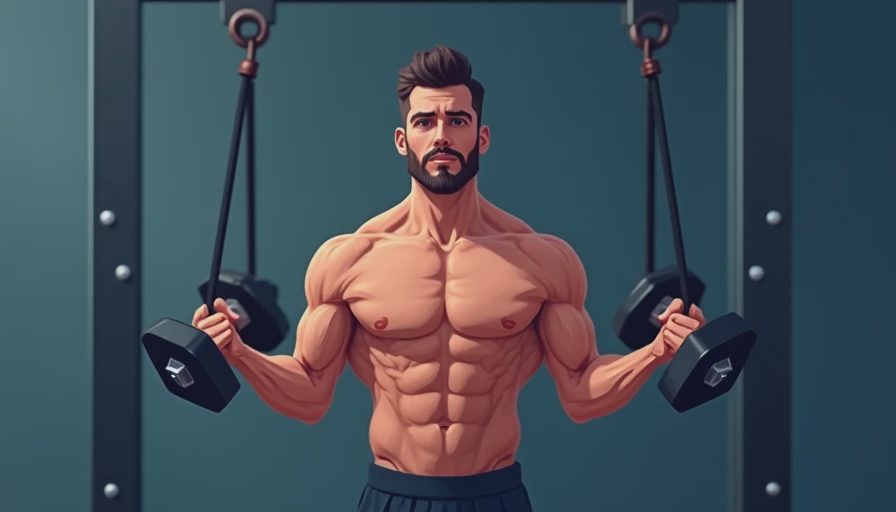
Begin with a horizontal push and a horizontal pull. A dumbbell bench press allows each arm to work independently and is often more comfortable for the shoulders than forcing a fixed bar position. Perform 3 sets of 6 to 10 repetitions. Lower the dumbbells for about two seconds, keep your feet planted, and avoid bouncing at the bottom.
Next, use a chest-supported dumbbell row for 3 sets of 8 to 12. Supporting your torso reduces the temptation to swing and makes the upper back do more work. Pull your elbows toward your ribs, pause briefly, and lower the weights under control. If you have access to a cable machine, a seated cable row is a reasonable substitute.
For a vertical pull, choose a lat pulldown or assisted pull-up. Complete 3 sets of 8 to 12. Pull the bar toward the upper chest without leaning dramatically backward. You do not need to yank the bar behind your neck. That extra range is not a badge of honor, and it can put your shoulders in an awkward position.
Finish with push-ups for 2 sets, stopping when your form starts to deteriorate. Elevate your hands on a bench if a floor push-up is too difficult. Lower the surface over time as you get stronger.
A simple two-day weekly plan
Here is a plan you can run on Monday and Thursday, or any two nonconsecutive days. On day one, perform dumbbell bench press, chest-supported row, incline push-up, and lat pulldown. Do 3 sets of each movement, using 6 to 12 repetitions depending on the exercise. Rest 90 seconds between sets, or longer if your breathing has not settled.
On day two, perform an incline dumbbell press, a seated cable row, a machine chest press, and a one-arm dumbbell row. Use 3 sets for the first two movements and 2 sets for the final two. This gives you enough work to progress without turning the session into a three-hour negotiation with yourself.
Warm up with five minutes of easy movement, then do one or two lighter practice sets before your first challenging exercise. Warm-ups should prepare you, not drain you. If your shoulder, elbow, or back hurts sharply rather than simply feeling challenged, stop that movement and change the setup or exercise.
How to progress without chasing gimmicks
Progressive overload does not mean adding weight every single workout. It means gradually asking your muscles to do more over time. Start with a weight you can lift for the lower end of the repetition range with clean form. When you can reach the top of the range on every set, add the smallest useful increase, often 2.5 to 5 pounds per dumbbell or 5 to 10 pounds on a machine.
For example, suppose you bench press 30-pound dumbbells for 8, 8, and 7 repetitions. Keep that load next week and aim for 8, 8, and 8. Continue until you reach 10, 10, and 10. Then try 32.5-pound dumbbells and expect your repetitions to drop. That is normal progression, not failure.
Write down the exercise, weight, repetitions, and any pain or difficulty. Memory is a poor training log, especially when you are managing a job, children, errands, and dinner. A phone note is enough. You do not need a leather-bound fitness journal.
Chest and back exercises for fat loss
These movements can help preserve and build muscle while you lose fat, but they are not a magic calorie furnace. Fat loss still depends primarily on maintaining a sustainable calorie deficit. Lifting supports the process by giving your body a reason to keep muscle, while food intake determines much of the energy balance.
Aim for a protein source at each meal: Greek yogurt at breakfast, beans or chicken at lunch, tofu or fish at dinner, for example. You do not need to eliminate carbohydrates, eat only chicken, or buy a supplement with a dramatic label. Eat enough to train well, then create a modest deficit you can maintain for months.
A 40-minute lifting session twice weekly, regular walking, and meals you can repeat will beat an extreme plan you abandon after ten days. If your scale weight pauses, judge progress by several weeks rather than one morning. Training performance, waist measurements, energy, and consistency all provide useful information.
Form checks that protect your progress
Keep your ribs from flaring aggressively during presses, and do not let your shoulders roll forward as you lower a weight. During rows, move your elbows deliberately instead of jerking the handle toward your stomach. On pulldowns, keep your neck relaxed and avoid turning the movement into a full-body swing.
Use a full range of motion that you can control. More weight is not automatically better if it shortens the movement and shifts work into your joints. If you are new to resistance training, pregnant, recovering from an injury, or managing a medical condition, get individualized guidance from a qualified professional before starting.
The one change to make this week is simple: schedule two sessions and record every set. Choose manageable chest and back exercises, leave your ego in the parking lot, and repeat the plan for four weeks before judging it. Eat enough. Train hard. Repeat.


No comments yet — be the first to share a thought.