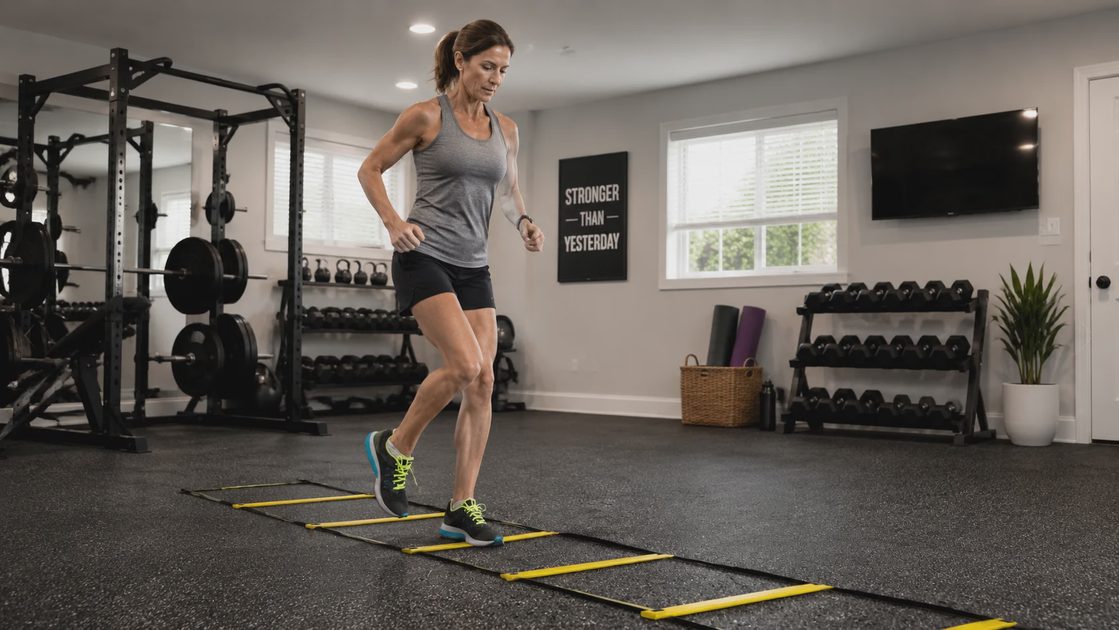
Two weeks ago I decided to add something new to my home training setup.My own routine is set in stone — barbell squats, deadlifts, bent‑over rows, three times a week, no exceptions. But lately I wanted something different. Not a replacement for strength training, but something to fill a gap: agility and conditioning.
I kept noticing on my weekend hikes that my feet just weren't as quick or light as I wanted them to be. So I went down an Amazon rabbit hole and found a 20‑foot adjustable agility ladder for $9.98 — cheaper than a takeout coffee and three meals combined. I hesitated for about three seconds, then hit buy.
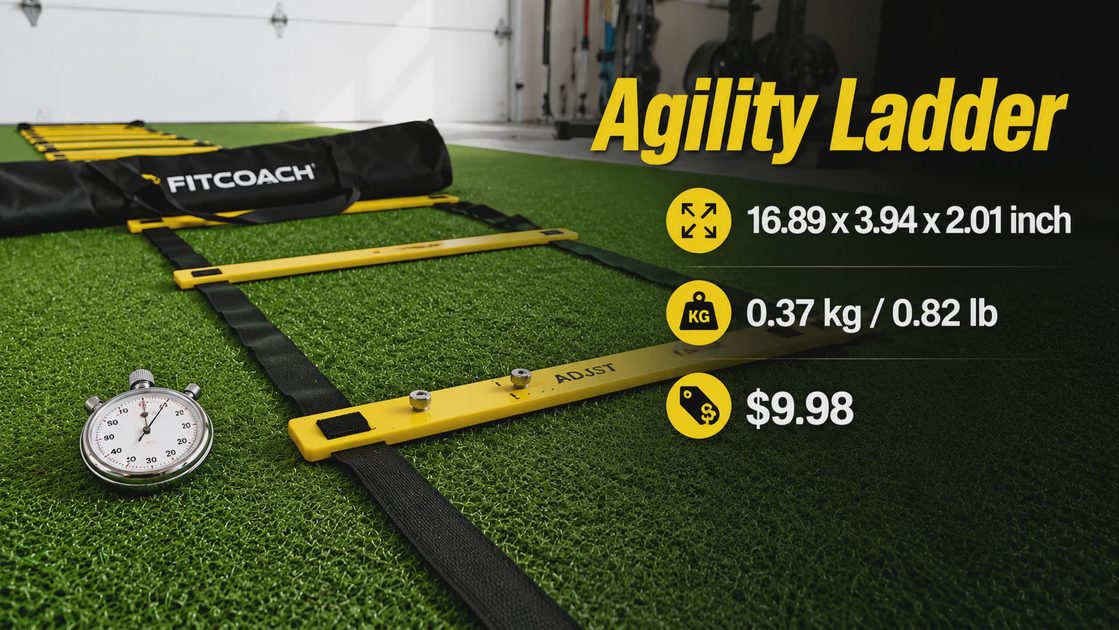
Why? Because I'm a registered dietitian, and over 20 years I've watched people drop hundreds of dollars on treadmills, ellipticals, and every "fat‑burning miracle machine" out there — most of which end up as very expensive clothes racks. The agility ladder is different. It might be the best‑value piece of home training equipment I can think of:
under $10, takes up less than a square metre of floor, and does a lot more than you'd expect.
What Actually Is an Agility Ladder?
You've probably seen one lying flat on a gym floor — that segmented strip divided into boxes — or watched a video online of someone's feet moving so fast you couldn't follow them.
In plain terms: an agility ladder is a training strip divided into equal boxes by horizontal rungs. You move in and out of those boxes using specific, fast footwork patterns.
Its actual, intended purpose is training footwork, speed, and coordination — it's a staple for soccer, basketball, and football players. It wasn't designed as a "fat‑burning device." But it does get you moving, and moving burns calories.
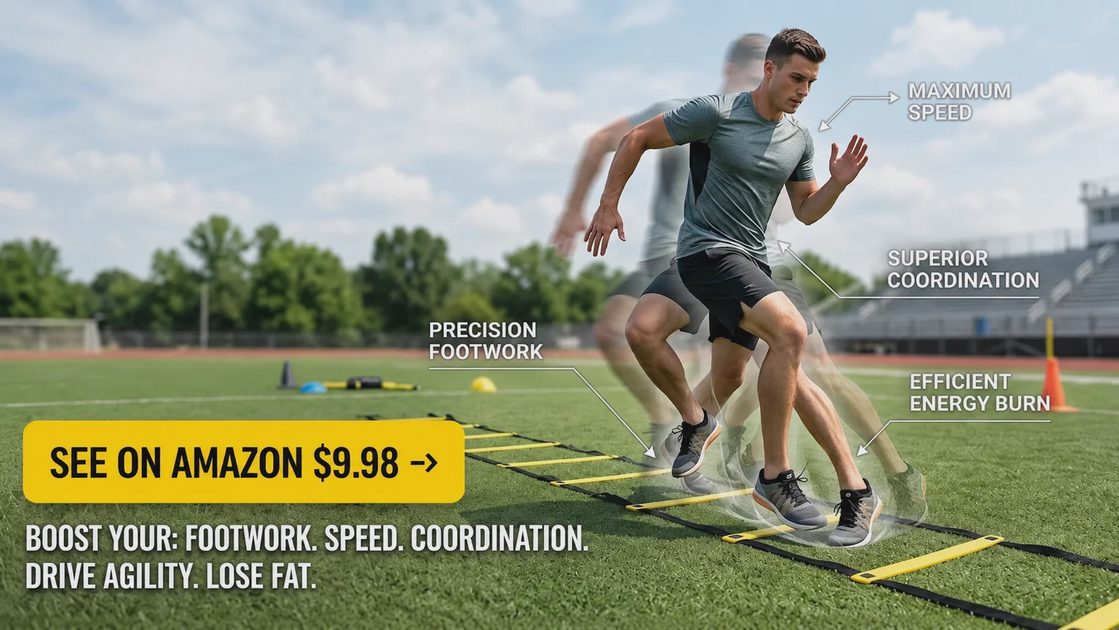
That distinction matters, so let's be precise about what the evidence actually says:
A study on recreational athletes found that eight weeks of consistent ladder training improved reaction time by roughly 40%, while also improving balance and lower‑body strength.
It will not meaningfully build muscle. This is bodyweight, low‑load training — it doesn't stimulate hypertrophy the way squats or deadlifts do. Don't confuse the two.
The calorie burn depends entirely on how you use it. Shuffle through the boxes slowly and you'd get more out of a brisk walk. Do it as high‑intensity intervals — sprint through, rest briefly, repeat — and the fat‑burning effect is comparable to HIIT.
Why It Actually Works for Fat Loss
This is the part I care about — and the part you should too.
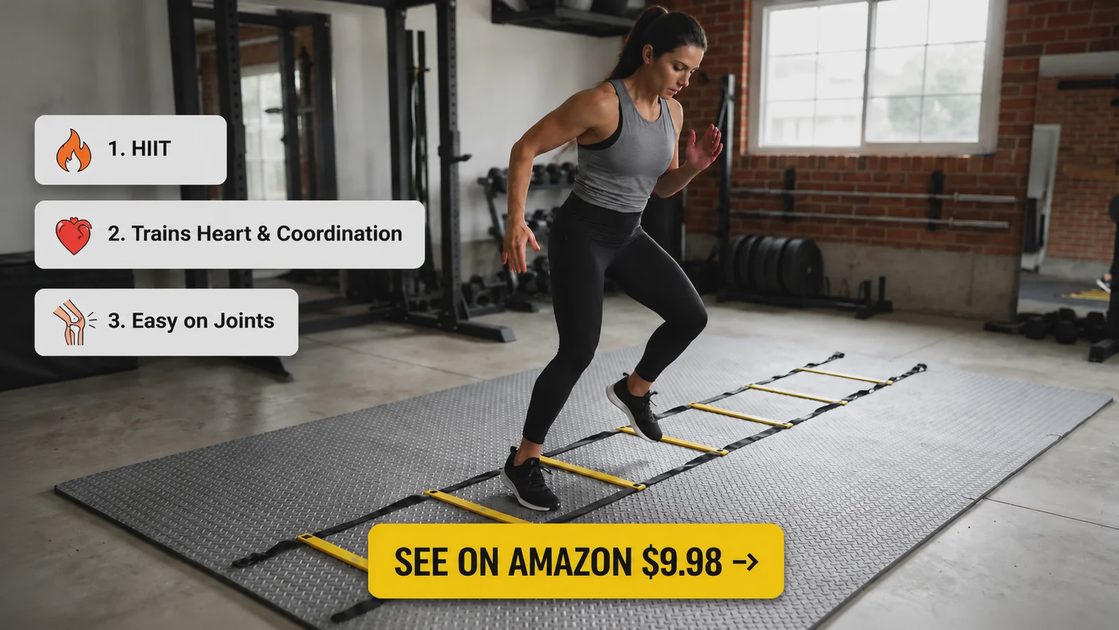
1. It's HIIT.
Agility ladder work, done right, is a form of high‑intensity interval training — short bursts of maximum effort followed by brief recovery. You're cycling between "all‑out sprint" and "quick breather," and that pattern burns more calories than most low‑intensity steady‑state cardio, like a leisurely walk. Same amount of time, more fat burned. That's just the math.
2. It trains your heart and your coordination at once.
This isn't just cardio. Ladder drills improve VO₂ max, balance, and coordination. As I mentioned, eight weeks of consistent practice can improve reaction time by around 40%. Your heart is pumping, your legs are firing, your core is stabilising — the whole system is working, not just one piece of it.
3. It's easy on your joints.
Unlike pounding pavement on a run, ladder drills are typically done on a soft surface or mat, which puts a lot less stress on your knees. For those of us in the 30‑to‑55 range — where knees have started filing complaints — that's a real, practical benefit.
How to Do It: Three Drills, Ten Minutes, Right at Home
You don't need a gym. You don't need a coach. You need a ladder, a clear patch of floor, and ten minutes.
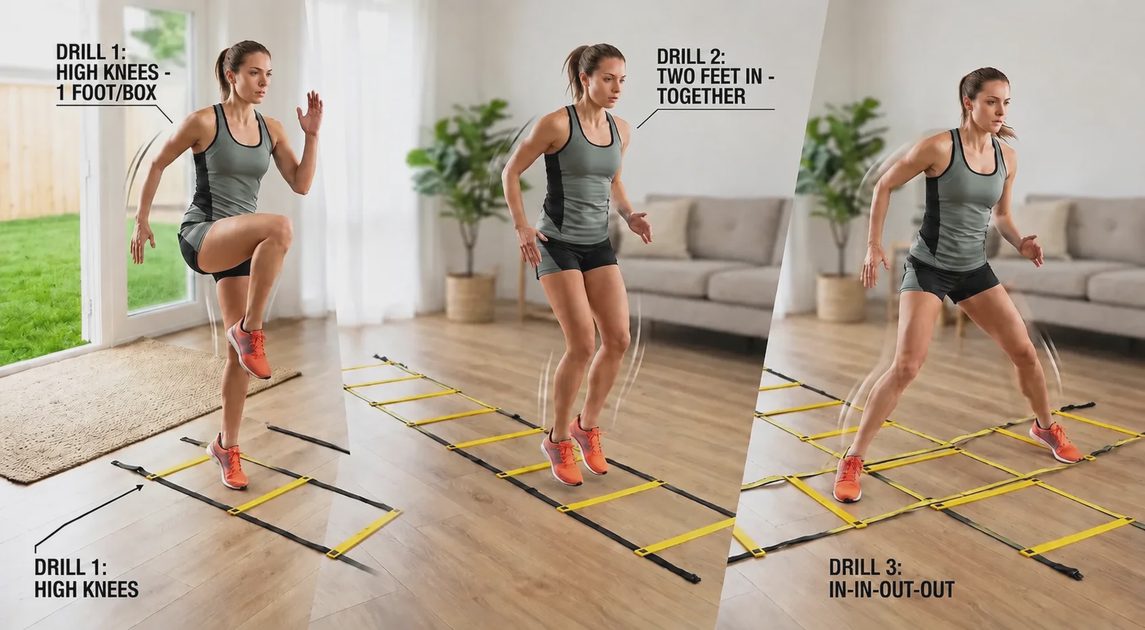
Here are three beginner‑friendly drills to start with:
Drill 1: High Knees, One Foot Per Box (Warm‑Up / Beginner)
Stand at one end of the ladder. Step into each box with one foot, driving the other knee up high, alternating as you move forward.
Do 30 seconds, rest 30 seconds, repeat for 4 rounds.Drill 2: Two Feet In, Together (Coordination)
Step both feet into a box together, then hop both feet forward into the next box together. Keep the rhythm steady and your centre of gravity controlled.
Do 3 sets of 1 minute, resting 30 seconds between sets.Drill 3: In‑In‑Out‑Out (Lateral / Direction Change)
Step both feet into a box, then step both feet out to the sides — wider than the ladder — then hop forward into the next box, and repeat. This one's lighter on the knees but gets your heart rate up fast.
Do 3 sets of 45 seconds.
Important reminder: footwork quality before speed. Get your feet landing cleanly before you try to move fast — your ankles and knees will thank you. If you have an old knee issue, do this on a mat or grass, not concrete.
Why I'm Recommending This $9.98 20‑Foot Adjustable Ladder
I have one rule when I buy gear: don't buy expensive, buy right.
Three things made this one worth it for me:
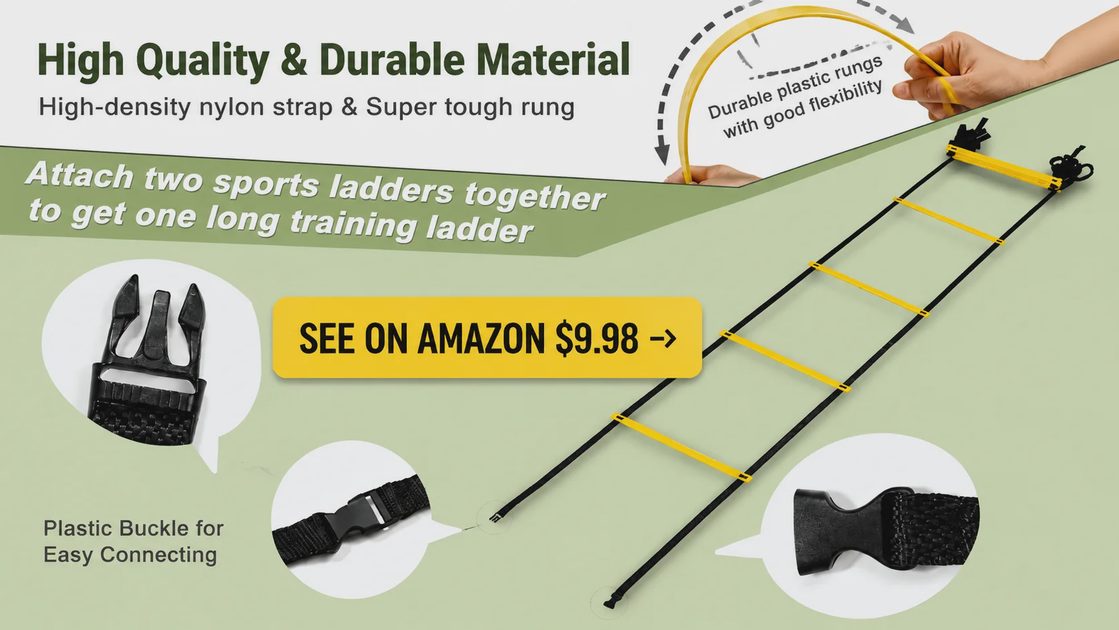
Adjustable spacing. The rungs can be set anywhere from 12 to 18 inches apart. Narrow spacing trains stride frequency; wider spacing trains stride length. One ladder, three different tools.
It comes with a carrying bag. Roll it up, toss it in a bag, done. It doesn't become another piece of clutter taking over your living room.
The price‑to‑value ratio is absurd. $9.98. You'll save more than that by skipping two takeout orders this week. It's sitting at 4.6 stars with 191 reviews on Amazon, and it's sold over 4,000 units in the past month — the crowd isn't wrong about this one.
My Honest Take
I'm not going to tell you an agility ladder will carve out abs in 30 days. That's a lie.
I'm also not going to tell you it's useless. That would insult your intelligence.
It's a tool. Same category as a jump rope, a kettlebell, a resistance band — genuinely useful, but only when you actually use it.
More importantly: don't let it become a way to dodge the things that actually matter.
Eating enough protein
Doing real strength training
Holding a calorie deficit
If you've already got those three things locked in and you want to add some variety, go ahead — grab a ladder and have fun with it.
If you haven't gotten those basics down yet, go fix your squat first. Then come talk to me about the ladder.
Eat enough. Train hard. Repeat.


No comments yet — be the first to share a thought.