A chest workout using barbell equipment does not need twelve exercises, a supplement cabinet, or a two-hour gym visit. You need a stable bench, manageable weight, good technique, and a plan you can repeat when work, kids, and Tuesday's general nonsense get in the way. The barbell bench press is efficient because it trains the pectorals, front shoulders, and triceps together. Done consistently, it builds strength and muscle while giving you a clear way to measure progress.
Why a Barbell Makes Sense for Chest Training
The barbell lets both hands work together, so you can usually move more weight than with dumbbells. That is useful for progressive overload, the gradual increase in training demand that tells your muscles to adapt. It is not a license to load the bar with every plate in the gym. Your joints do not care how impressive the number looks on Instagram.
A sensible chest workout using barbell movements starts with one primary press and adds one or two supporting exercises. For many adults, two weekly chest sessions are enough. Leave at least 48 hours between them. On the first day, you might use heavier sets of five to eight repetitions. On the second, use lighter sets of eight to twelve. This gives you practice without turning every workout into a test of survival.

Set Up the Bench Press Without Guesswork
Place your eyes directly under the bar when lying on the bench. Your feet should stay flat on the floor, with your upper back and glutes in contact with the bench. Pull your shoulder blades gently down and back. This creates a stable platform and keeps your shoulders from rolling forward as you press.
Grip the bar just outside shoulder width. A good starting point is a position where your forearms are close to vertical when the bar reaches your chest. Unrack it with straight arms, then lower it toward the lower half of your chest while keeping your wrists stacked over your elbows. Touch lightly, pause for control, and press the bar up and slightly back.
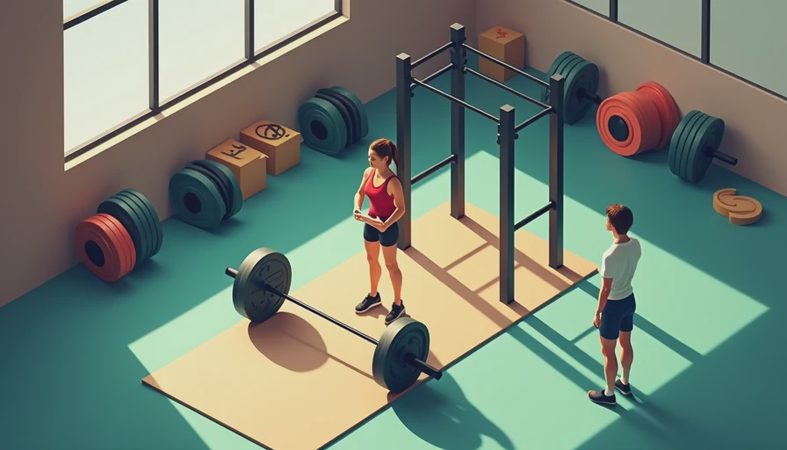
If you train alone, use a power rack with safety pins set just below chest level. The pins should catch the bar without trapping you. A spotter is useful for heavy work, but a spotter should assist only when necessary, not yank the bar through every repetition.
A Practical Chest Workout Using Barbell
Start with five minutes of easy movement, such as walking or cycling, followed by two or three warm-up sets for the press. Do not count those light sets as working sets. They prepare your shoulders and help you practice the movement.
Your main workout can look like this:
Bench press: 3 sets of 5 to 8 repetitions, resting 2 to 3 minutes.
Close-grip bench press: 3 sets of 8 to 10 repetitions, resting 90 seconds.
Barbell floor press: 2 sets of 8 to 12 repetitions, resting 90 seconds.
The close-grip press shifts some work toward the triceps, while the floor press limits shoulder extension and can feel comfortable for people who dislike a deep stretch. Keep one or two repetitions in reserve on most sets. In plain English, finish the set knowing you could have performed another clean repetition or two. Grinding until the bar stalls is not required for growth.
How to Progress Without Chasing Ego Numbers
Use a double-progression approach. Choose a weight you can lift for at least five clean repetitions. Each week, try to add one repetition somewhere in the three working sets. Once you can perform 8, 8, and 8 with solid form, increase the load by 5 pounds, or by the smallest plates available, and return to five or six repetitions.
For example, a driver who works out before commuting might bench 95 pounds for 8, 7, and 6 repetitions in week one. The next target could be 8, 8, and 7, not an aggressive jump to 135 pounds. Small improvements are still improvements. Keep a notebook or phone log with the weight, repetitions, and a short note about how the sets felt. After eight weeks, that record is more useful than memory.
If performance drops for two workouts in a row, reduce the load by about 10 percent for one week. Sleep, stress, missed meals, and accumulated fatigue all affect training. Adjusting is not quitting; it is how you keep training long enough to get results.
Eat Enough to Support the Work
A chest workout using barbell equipment cannot compensate for chronically under-eating. Muscle repair requires energy and protein. Include a protein-rich food at each meal, such as eggs, Greek yogurt, cottage cheese, chicken, fish, tofu, beans, or lean beef. A practical daily protein target for many active adults is roughly 1.2 to 1.6 grams per kilogram of body weight, though medical conditions can change that recommendation.
Have a normal meal two to three hours before lifting. Oatmeal with yogurt, a turkey sandwich with fruit, or rice with tofu are boring choices in the best possible way. After training, eat your next regular meal instead of panic-buying a $60 tub of powdered promises. Carbohydrates help support hard sessions, and vegetables, fruit, and whole grains support the rest of your health.
If fat loss is your goal, use a modest calorie deficit rather than starving yourself. Losing roughly 0.5 to 1 percent of body weight per week is a common practical range, but strength can fluctuate while dieting. The goal is to preserve muscle and habits, not win a three-week suffering contest.
Common Mistakes and Your One-Week Assignment
The biggest mistakes are bouncing the bar off the chest, flaring the elbows dramatically, lifting the hips, and adding weight before technique is repeatable. Another mistake is treating chest training as the entire program. Balance pressing with pulling exercises such as rows and pulldowns, and train the legs, core, and upper back across the week.
This week, complete the workout twice with at least two rest days between sessions. Record every set. Use a weight that leaves one or two good repetitions in reserve, and add only 5 pounds when you reach the top of the repetition range with control. Stop if you feel sharp pain, numbness, or unusual weakness; ordinary effort is not the same as injury pain, and a qualified clinician can help you sort out persistent symptoms.
You do not need a miracle program. You need a repeatable chest workout using barbell exercises, enough food to recover, and the patience to improve in small increments. Eat enough. Train hard. Repeat.
No comments yet — be the first to share a thought.