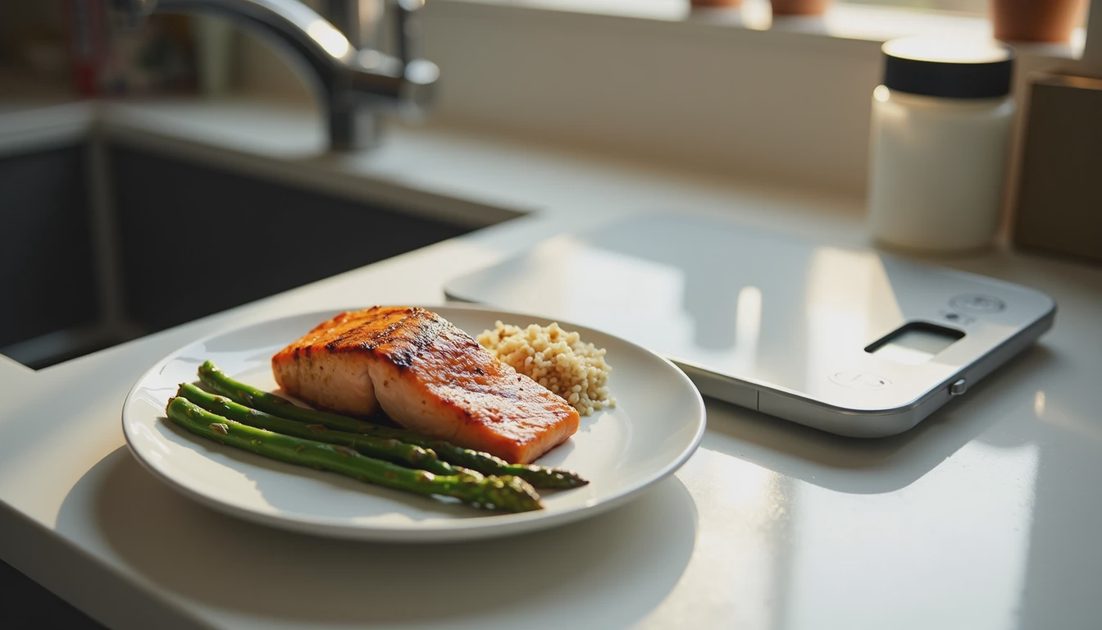
I'm an RD, and I don't weigh every grape. Here's the 80/20 method that doesn't require a food scale at every meal.
Here's a confession: I don't count macros every single day. And I don't think you should either.
I've spent 20 years watching people turn nutrition tracking into a full-time job. They weigh everything. They log everything. They stress about every gram. And then they quit—because tracking 47 different foods a day is exhausting.
Here's the alternative: you don't need to count macros perfectly. You need to count them strategically.
The goal isn't to become a human nutrition calculator. The goal is to understand what you're eating well enough that you could stop tracking and still get results.
What Are Macros, Anyway?
"Macros" is short for macronutrients—protein, carbohydrates, and fat.
Macronutrient | Calories per Gram | What It Does |
|---|---|---|
Protein | 4 | Builds muscle, keeps you full, protects metabolism |
Carbs | 4 | Fuels your brain and muscles |
Fat | 9 | Supports hormones, absorbs vitamins |
Fat is more than twice as calorie-dense as protein and carbs. That matters—not because fat is "bad," but because it adds up fast.
Step 1: Start With Protein (Always)
Set your protein target first. Everything else is flexible.
Why? Because protein protects your muscle in a calorie deficit, keeps you full, and has a high thermic effect—your body burns calories just digesting it.
How much? Aim for 1.6–2.2 grams per kilogram of body weight. For a 150-pound person, that's about 110–150 grams per day.
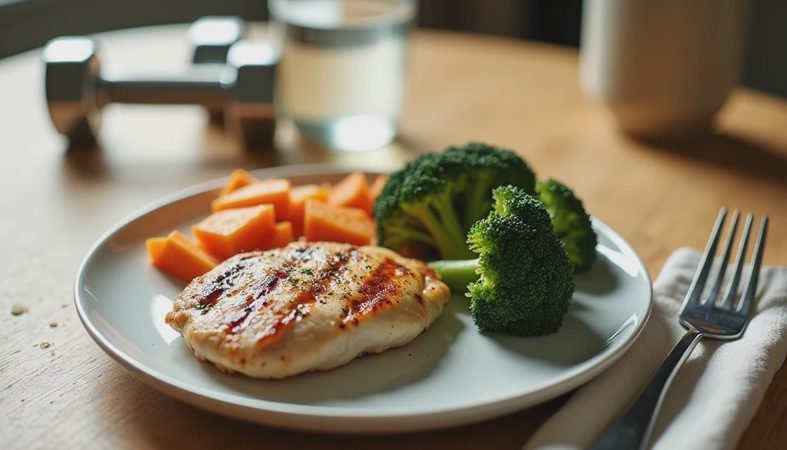
Simpler version: one palm-sized portion of protein at every meal. That's roughly 20–30 grams per meal. Add a protein-rich snack (Greek yogurt, hard-boiled egg) and you're there.
Protein is a goal. Hit it consistently.

Step 2: Let Carbs and Fat Fall Where They May
Once you've set your protein target, you have two choices:
Option A: The "I Don't Want to Track Everything" Approach (80/20)
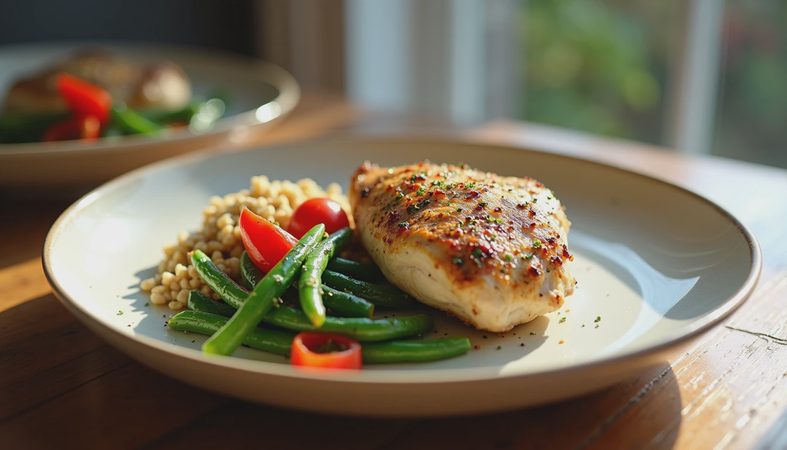
Set a calorie target. Eat protein first. Fill the rest with vegetables and complex carbs. Add fat for flavor. Don't track grams of carbs and fat—just calories and protein.
Option B: The "I Want to Be More Precise" Approach
For a 150-pound person eating 1,800 calories with 130g protein and 25% fat, that leaves about 830 calories for carbs—roughly 207g. Yes, you can eat that many carbs and still lose fat.
Step 3: Pick Your Tracking Tool
1. The "No App" Method
Write down what you eat for three days. Just the food. Ask: Is there protein at every meal? Vegetables? Mostly whole foods? This alone fixes 80% of problems.
2. The Paper Journal
Track protein and calories only. No apps, no phone.
3. The App Method
Use MyFitnessPal, Cronometer, or MacroFactor. Cronometer tends to be more accurate because it uses verified databases.
A word of caution: A 2026 NIH study found that four popular apps underestimated true calories by 250–345 calories per meal—enough to erase your entire deficit. Use apps to build awareness, not to obsess over precision.
Step 4: Focus on Trends, Not Daily Perfection
You don't need to hit your macros perfectly every single day. You need to hit them most days, on average, over time.
Track for two weeks. Look at your weekly average—not daily numbers. Did you average 120g of protein? Good. Within 200 calories of your target most days? Good.
After two weeks, ask yourself:
Am I losing weight at the expected rate?
Do I have energy for workouts?
Am I hungry all the time?
If yes to all three, you're in a good place. If not, adjust.
The Traps That Will Drive You Crazy (and How to Avoid Them)
Trap #1: Weighing everything. Use a scale for two weeks to train your eyes on portion sizes. Then ditch it.
Trap #2: Forgetting "invisible" calories. Oil in the pan. Butter on bread. Cream in coffee. Dressing on salad. Track them—they add up fast.
Trap #3: Obsessing over exact numbers. Nutrition labels have up to 20% margin of error. Aim for "close enough."
Trap #4: Letting tracking become a moral judgment. You're not a "good person" for hitting macros. You're not "bad" for missing them. Food is fuel, not a report card.
The Protein Leverage Hypothesis
Your body has a strong drive to get enough protein. When your diet is low in protein, you keep eating until you get it—even if that means overeating calories. That's why a carb-heavy breakfast leaves you hungry two hours later: your body is still hunting for protein.
Prioritize protein, satisfy that drive early, and you'll eat fewer total calories without feeling deprived.

Eat enough. Train hard. Repeat.
No comments yet — be the first to share a thought.