The barbell chin up is one of those exercises people make unnecessarily complicated. You need a sturdy pull-up bar, a controlled grip, and a plan that starts at your current strength level. You do not need swinging reps, a six-week transformation promise, or a cabinet full of supplements. If you can train two or three times per week, this movement can build useful upper-back, arm, and grip strength while fitting into a normal life.
What the barbell chin up actually trains
A barbell chin up uses an underhand grip, usually with your palms facing toward you. Your biceps help bend the elbows, while the latissimus dorsi and other upper-back muscles pull your body upward. Your trunk also works to keep your ribs, pelvis, and legs from flailing around. That makes the exercise more demanding than a simple arm curl and more practical than chasing a pump in front of the mirror.
The underhand position often feels friendlier than a wide overhand pull-up, but it is not automatically easy. Your body weight is still the resistance. A person weighing 180 pounds is asking the back and arms to move a substantial load through a large range of motion. That is why your first goal should be a clean repetition, not an impressive-looking number attached to a belt.
For fat loss, this exercise is not magic. It will not cancel a weekend of random snacking, and it does not need to. Strength training helps you preserve and develop muscle while you create a reasonable calorie deficit through food and activity. Eat enough protein, build meals you can repeat, and treat the barbell chin up as one useful tool in the training plan.
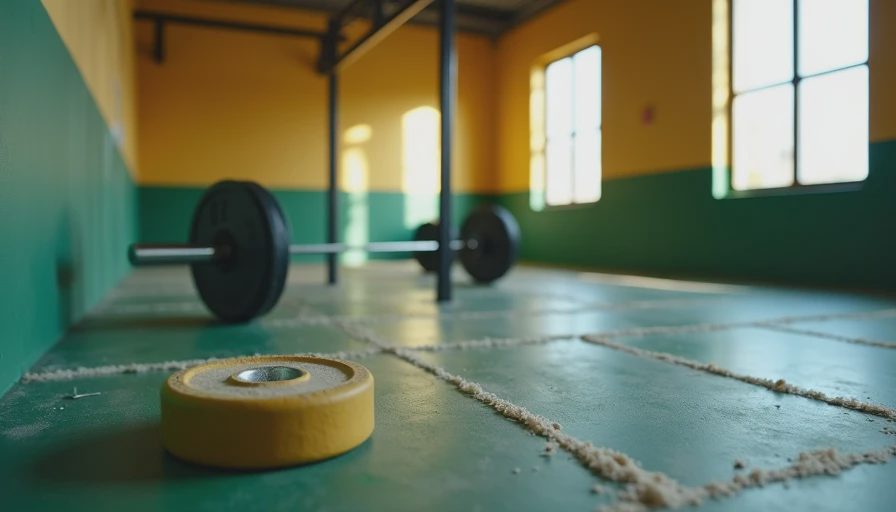
Set up each rep like you mean it
Start with a bar high enough that your feet leave the floor. Use a shoulder-width underhand grip, wrap your thumbs around the bar, and let your arms reach long without relaxing into a painful shoulder position. Before pulling, brace your stomach as if someone is about to poke it. Keep your legs quiet and your gaze neutral.
Pull your elbows down toward your ribs rather than trying to crane your chin over the bar. Finish when your chin clearly passes the bar, then lower under control until your elbows are straight. A two-second descent is a good starting target. Do not drop from the top. The lowering phase is still training, and it gives you a way to build strength when the full repetition is not there yet.
A proper barbell chin up should look almost boring. There is no knee kick, hip thrust, or dramatic backward lean. A small amount of natural movement is not a crisis, but using momentum to turn a hard rep into a half-rep defeats the point. Record a side-view set occasionally. Video is often more honest than your memory.
Choose the right starting variation
If you cannot complete one full repetition, start with assisted reps. A resistance band looped over the bar can reduce the load, although the assistance changes through the movement. An assisted pull-up machine lets you select a counterweight and gradually reduce it. Neither option is cheating. Both let you practice the same pulling pattern while accumulating useful work.
You can also use foot-assisted repetitions. Place one foot on a box beneath the bar and use only enough pressure to help you pass the sticking point. Keep the assistance consistent instead of turning the box into a launch pad. Another effective option is the negative: step or jump to the top, pause briefly, and lower for three to five seconds.
For a beginner, try three sets of three to five assisted repetitions, or four sets of one negative. Rest two to three minutes between sets. When every rep is controlled, reduce the assistance slightly. The barbell chin up improves through repeated exposure, not through one heroic workout followed by two weeks of sore elbows.
A simple progression for busy adults
Train the movement twice weekly, leaving at least two days between sessions. On the first day, perform four sets of assisted repetitions with two or three good reps still available before failure. On the second day, perform three sets of slow negatives or isometric holds at the top. Add a rowing exercise, such as a cable row or dumbbell row, for three sets of eight to twelve repetitions.
When you can complete three sets of five strict repetitions, move toward four sets of five. After that, add one repetition to only one set at a time. This slower approach keeps fatigue manageable and makes progress easier to measure. If your total goes from 8 clean reps across a workout to 12, that is progress even if your scale weight has not changed.
Once you can perform four sets of eight with steady form, you can add a small amount of external weight. A one-pound or two-and-a-half-pound increase is enough. Use a dip belt if available, or hold a dumbbell securely between your feet only if you can maintain control. Weighted work belongs after your bodyweight technique is dependable.

The mistakes that stall progress
The first mistake is testing your maximum every session. A daily challenge of “as many as possible” sounds tough but often produces sloppy reps, irritated elbows, and no clear progression. Most working sets should stop before failure. Save an occasional hard set for testing, not as the entire program.
The second mistake is ignoring the bottom position. Stopping with bent elbows reduces the range and lets you avoid the hardest part. Work within a pain-free range, but gradually build toward straight arms. The third mistake is treating grip strength as an afterthought. If your hands open first, add dead hangs for two or three sets of 15 to 30 seconds after training.
Finally, do not let a supplement advertisement convince you that a powder will solve a programming problem. Creatine can be useful for some lifters, but it cannot replace consistent sessions, adequate food, and sleep. If the exercise causes sharp shoulder or elbow pain, stop and get qualified medical or physical therapy guidance rather than pushing through it.
Your one change this week
Put the barbell chin up near the beginning of one workout this week, when your grip and upper back are fresh. Complete five total sets using the hardest variation you can control. Write down the assistance level, repetitions, and whether the last rep stayed strict. Repeat that exact session once more later in the week.
Next week, change only one variable: add a repetition, reduce assistance, or slow the lowering phase. Do not change all three. This is how you turn a vague goal into measurable training. Pair the work with a meal containing a solid protein source, a carbohydrate you enjoy, and produce. There is no prize for training hard while underfed and then raiding the pantry at 10 p.m.
The barbell chin up rewards patience because strength is specific and adaptations take repeated practice. Your shoulders do not care whether the workout looked exciting on social media. They care about sensible loading, recovery, and clean movement. Eat enough. Train hard. Repeat.

No comments yet — be the first to share a thought.