Caffeine barbell training is not a magic workout system or a special fat-loss formula. It is simply the combination of caffeine and barbell-based resistance training, two tools that can be useful when you use them with a plan. The caffeine barbell approach works best when it helps you show up, lift with focus, and finish your session without wrecking your sleep. It fails when a stimulant becomes the only reason you can train.
I have helped thousands of people lose weight, and the boring truth remains the same: your results come from repeated meals, sensible portions, progressive training, and recovery. A caffeine barbell routine can support that process. It cannot replace breakfast, adequate protein, or eight hours of sleep that you never get because you drank a giant energy drink at 5 p.m.
What caffeine actually does for lifting
Caffeine is a stimulant that can increase alertness and reduce the feeling of effort during exercise. That matters on a Tuesday morning when your toddler was awake twice, your commute is ugly, and the idea of deadlifting feels like an insult. It can help you feel ready to train, but it does not create strength from thin air.
For many adults, a useful starting dose is 1 to 3 milligrams of caffeine per kilogram of body weight, taken about 30 to 60 minutes before training. A 165-pound person weighs about 75 kilograms, so that range equals roughly 75 to 225 milligrams. You do not need to begin at the high end. An 8-ounce cup of coffee often contains about 80 to 100 milligrams, although the amount varies by roast, preparation, and serving size.
The caffeine barbell lesson is straightforward: use the smallest dose that improves your workout. More is not automatically better. High doses can cause jitteriness, nausea, a racing heart, anxiety, and a crash that makes the rest of your day miserable. The general adult limit of about 400 milligrams per day is not a target, and people who are pregnant, sensitive to caffeine, or managing certain heart or anxiety conditions should ask a clinician about a lower limit.
Do not forget the hidden caffeine in pre-workout powders, tea, soda, chocolate, and some medications. Add the totals before you decide that another scoop is harmless.
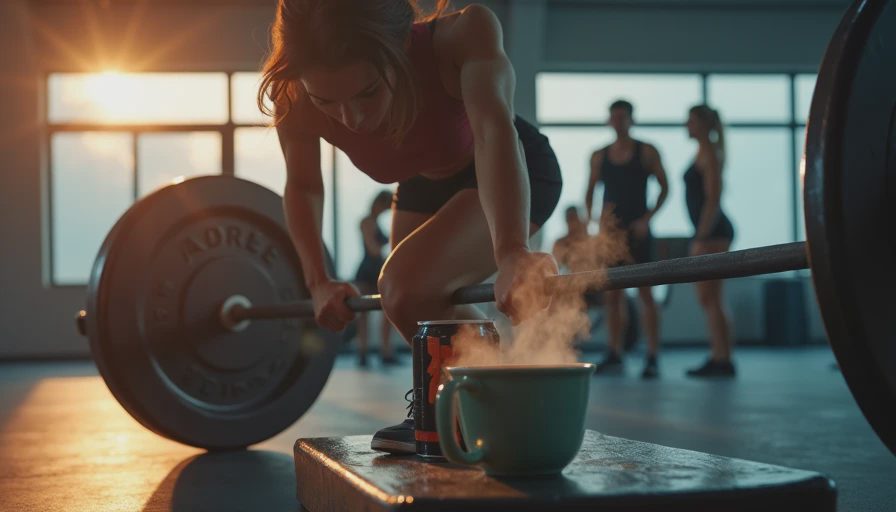
Build a practical caffeine barbell session
A good caffeine barbell session has a job. Maybe you are practicing the squat, building upper-body strength, or completing a full-body workout in 45 minutes. Do not walk into the gym and perform every exercise you saw on social media. Choose a few movements, record your work, and leave enough energy to recover.
For a busy adult, this full-body template is plenty three days per week:
- Back squat or goblet squat: 3 sets of 5 to 8 reps.
- Bench press or dumbbell press: 3 sets of 6 to 10 reps.
- Barbell row or cable row: 3 sets of 8 to 12 reps.
- Romanian deadlift: 2 sets of 8 to 10 reps.
- Farmer carry or plank: 3 short rounds.
Use a weight that leaves about two good repetitions in reserve on most sets. If your form becomes sloppy, the weight is too heavy for that day. Add 5 pounds to an upper-body lift or 5 to 10 pounds to a lower-body lift when you complete every prescribed repetition with controlled technique. That is progressive overload. It is less exciting than a transformation challenge, and it works better.
The caffeine barbell setup should also include five minutes of general movement and several lighter warm-up sets. Your first loaded squat should not be your first squat of the day. A warm-up raises body temperature, rehearses technique, and gives you a chance to notice a stiff hip or sore back before the bar gets heavy.
Timing, food, and the afternoon problem
Caffeine reaches the bloodstream fairly quickly, but the useful timing window is not identical for everyone. Try coffee 45 minutes before lifting for one week, then compare your energy, performance, and sleep with a lower-dose day. Keep the rest of the session consistent so you are testing one variable rather than conducting nutritional chaos.
Food matters more than the stimulant. If you train after work, eat a meal with 25 to 35 grams of protein and a meaningful carbohydrate portion two to three hours beforehand. Greek yogurt with fruit, a turkey sandwich, or rice with chicken can do the job. If you train early, a banana and a protein shake may be enough, especially if a full meal makes you nauseated.
Avoid treating caffeine as a bridge over chronic under-eating. A 200-calorie breakfast and a large coffee will not reliably power a demanding lifting session. Eat enough to train hard, particularly if fat loss is your goal. A moderate calorie deficit is easier to sustain than slashing food and trying to cover the gap with stimulants.
For the caffeine barbell routine, set a cutoff time based on bedtime. Caffeine can remain active for hours, and poor sleep makes hunger, recovery, and training consistency harder. If you go to bed at 10 p.m., a 2 p.m. cutoff is a sensible experiment. Some people need an earlier one.

Safety rules that are not optional
Stop the session and seek medical guidance for chest pain, fainting, severe shortness of breath, or a heartbeat that feels irregular. Ordinary exertion is uncomfortable; those symptoms are not a badge of effort. Also pay attention to less dramatic warnings, such as repeated headaches, tremors, stomach upset, or anxiety after your pre-workout drink.
Never mix several stimulant products because the label promises an advanced formula. A coffee, a pre-workout scoop, and an energy drink can push your total much higher than expected. Avoid buying unlabeled powders or products that hide the caffeine amount inside a proprietary blend. You deserve to know what you are taking.
Barbell safety matters just as much as caffeine safety. Learn the rack setup, use safety pins for squats and presses, and ask a qualified coach to check your technique. Start lighter than your ego prefers. A missed lift is not a character flaw, but an avoidable injury can interrupt months of progress.
A simple two-week experiment
For week one, train three times using the full-body template. Drink your usual coffee or use no caffeine if that is your normal routine. Record the weight, repetitions, perceived effort, bedtime, and sleep quality. Do not change your calories, supplements, and training plan all at once.
For week two, use a measured 80 to 150 milligrams 30 to 60 minutes before two sessions only. Compare those workouts with the first week. Did you complete more repetitions with the same weight? Did the session feel more manageable? Did you sleep normally? If performance improved but sleep deteriorated, the trade was poor. Lower the dose or move the workout earlier.
This is the useful caffeine barbell standard: better training with no meaningful cost to sleep, appetite, digestion, or anxiety. If coffee gives you that result, coffee is enough. You do not need a neon tub, a complicated cycling protocol, or a supplement stack that costs $60 per month.
The boring plan that wins
Use caffeine as an optional tool, not a personality. Lift three days per week, walk regularly, eat protein at each meal, include vegetables and carbohydrates, and keep your calorie deficit moderate if you want fat loss. Take at least one rest day between demanding full-body sessions. Strength improves when you recover from training, not when you punish yourself for missing one workout.
The best caffeine barbell plan is the one you can repeat during a stressful workweek. If your dose is modest, your technique is controlled, and your bedtime remains protected, you have a useful routine. If you need escalating stimulants to tolerate every workout, fix the basics first: sleep, food, scheduling, and a realistic program.
Eat enough. Train hard. Repeat. That beats chasing the next miracle powder every time.

No comments yet — be the first to share a thought.