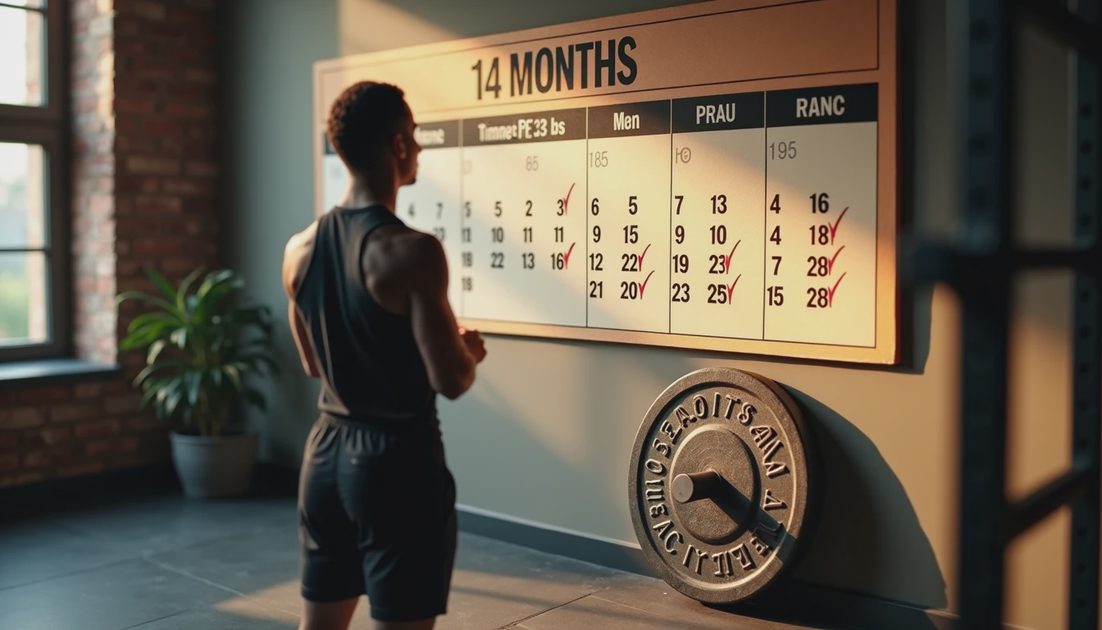
Meet "Sarah" (not her real name). She lost 40 pounds without a single "cheat day" because she stopped believing in cheat days. Here's her weekly average data.
I've been doing this long enough to know that real transformation doesn't happen in 30 days. It happens in 14 months.
"Sarah" walked into my telehealth practice in April 2025. She was 47, a marketing director at a mid-sized firm, mother of two teenagers, and she'd done the weight-loss rodeo more times than she cared to admit.
She'd lost 25 pounds on keto. Gained back 30. Lost 18 pounds on Whole30. Gained back 22. She'd done the 75 Hard challenge, the 21-day fix, the "drop a dress size in 10 days" programs that flood your Instagram feed. Every time, the weight came off fast, and every time, it came back faster—usually with friends.
By the time she found me, she was 215 pounds, tired of feeling like a failure, and ready to try something she'd never tried before: the boring approach.
Here's what that looked like.
Where She Started
Starting weight: 215 lbs
Height: 5'6"
Goal: 175 lbs
Timeline: 14 months
Daily calorie target: 1,800–1,900
Protein target: 120–130g per day
Training: 3x/week strength training, 2x/week walking
That's the unsexy math. No 1,200-calorie crash. No "no carb after 6 PM" nonsense. Just a moderate deficit, adequate protein, and consistent training.
Why 14 months? At 40 pounds over 14 months, Sarah averaged about 0.7 pounds per week. Some weeks she lost a pound. Some weeks she lost half a pound. And some weeks she lost nothing at all. But she kept going.
Here's the secret that nobody wants to hear: 0.7 pounds a week for 14 months is 40 pounds. The math works. It just doesn't work fast.
Phase 1: Month 1–3 (The Unlearning Phase)
The first three months weren't about weight loss. They were about unlearning everything the diet industry had taught her.
Sarah had spent decades believing that weight loss required suffering. That hunger was a sign of progress. That exercise was punishment for what she ate.
I told her the exact opposite: Eat enough to train. Train hard to keep muscle.
We started with three simple rules:
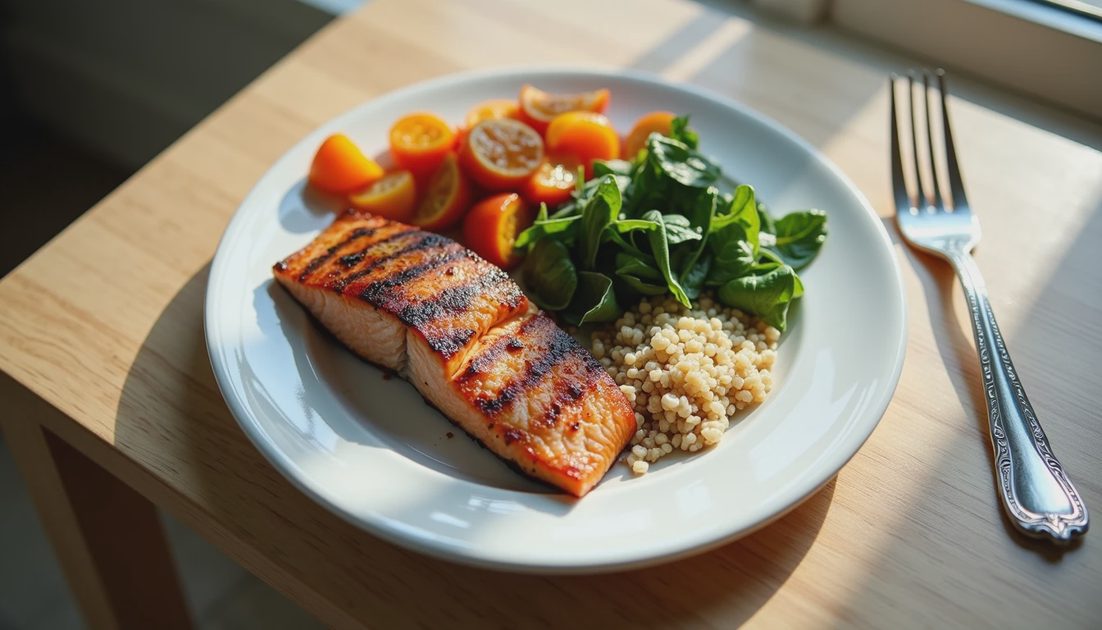
Protein at every meal. One palm-sized portion, three times a day. That's 90 grams right there. Add a Greek yogurt or protein shake as a snack, and she was hitting her 120-130g target without breaking a sweat.
The 2:1:1 plate. Half vegetables, one quarter protein, one quarter carbs. She didn't weigh anything. She just looked at her plate and asked: "Is this 2:1:1?"
Strength training, twice a week. Not cardio. Not HIIT. Just squat, hinge, push, pull, carry—the five lifts I've written about elsewhere on this blog. Thirty minutes, twice a week. That's it.
Results at month 3: Down 8 pounds. Slow. Frustratingly slow, by her standards. But here's what she didn't know yet: she'd lost almost zero muscle. Her body composition was shifting. Her clothes were fitting differently. And for the first time in her life, she wasn't starving.
Phase 2: Month 4–8 (The Consistency Phase)
This is where most people quit. The initial motivation has worn off. The scale is moving, but not fast enough to feel exciting. Life gets busy. The novelty is gone.
Sarah hit this wall at month 5. The scale hadn't moved in two weeks. She was frustrated. She sent me a message that I've seen a thousand times: "Erin, am I doing something wrong?"
I sent back the troubleshooting checklist I give every client who hits a plateau:
Are you tracking accurately? (Oils, dressings, "just a bite"?)
Are you sleeping at least 6 hours?
Are you training harder than before (water retention)?
Are you due for a refeed day?
We adjusted her calories up slightly on training days—from 1,800 to 1,900. We added a third strength session per week. She started weighing herself daily but tracking the weekly average, not the daily number.
Results at month 8: Down 18 pounds total. Still slow. Still boring. But her body was changing in ways the scale couldn't capture. Her waist had dropped two inches. Her resting heart rate was down. She had more energy at 3 PM than she'd had in years.
A 2012 study of obese postmenopausal women found that slow weight loss was associated with better preservation of lean body mass and greater decreases in fat mass compared to rapid weight loss. Sarah was living that research. She was losing fat, not muscle—and that meant her metabolism was staying intact.

Phase 3: Month 9–14 (The Maintenance Prep Phase)
Here's the part most weight loss programs don't talk about: the last few pounds are the hardest.
Sarah hit 185 pounds at month 10. She needed to lose 10 more pounds to hit her goal. And those 10 pounds took four months.
Why? Because her body had adapted to the deficit. Her metabolic rate had dropped slightly—as it does during any extended calorie restriction. She was burning fewer calories at rest than she had been at the start.
We didn't panic. We didn't cut calories further. Instead, we made small adjustments:
Slightly more walking (8,500 steps per day instead of 6,000)
More protein on training days
A "refeed" day every two weeks—eating at maintenance to give her metabolism a reset
Results at month 14: 175 pounds. 40 pounds total lost. 14 months. No crash diets. No detox teas. No "detox" anything. Just math, protein, and consistency.
Where She Is Now
Sarah hit her goal weight in June 2026. She's been in maintenance for two months. She's not "dieting." She's eating the same way she ate during the weight loss phase, just with slightly more carbs and fat.
Her body fat percentage dropped from 38% to 29%. Her blood pressure is normal for the first time in a decade. She's lifting more weight now than she was at the start—more muscle, not less.
And here's what she told me at her last check-in: "Erin, I used to think I needed to be perfect. That one bad meal meant I'd failed. Now I just ... eat the meal and move on. It's so boring. I love it."
That's the whole point. Boring survives a Tuesday.
What Sarah's Story Teaches Us
1. Slow loss is sustainable loss. Sarah averaged 0.7 pounds per week. That's 40 pounds over 14 months. Research shows that slow weight loss is associated with more favorable body composition outcomes than rapid loss. You lose more fat and less muscle.
2. Muscle preservation matters more than scale speed. A 2014 randomized controlled trial found that whether you lose weight fast or slow, the rate of regain is the same—what matters is what you're losing. Lose muscle, and you set yourself up for regain. Preserve muscle, and you set yourself up for maintenance.
3. Protein isn't optional. Sarah hit 120-130g of protein every single day. That protected her muscle mass during 14 months of deficit. Research consistently shows that higher protein intake during weight loss helps preserve lean mass.
4. The scale is a liar. Sarah weighed herself daily but tracked weekly averages. Some weeks she "gained" two pounds overnight. It was glycogen, water, sodium, or hormones—never fat. The weekly average told the real story.
Eat enough. Train hard. Repeat.

No comments yet — be the first to share a thought.